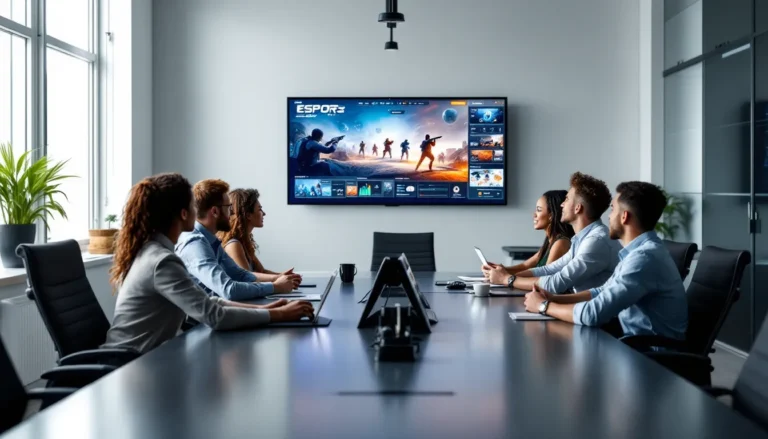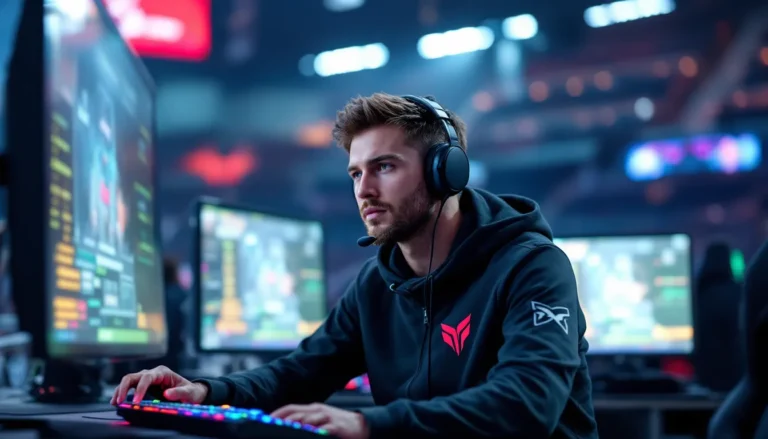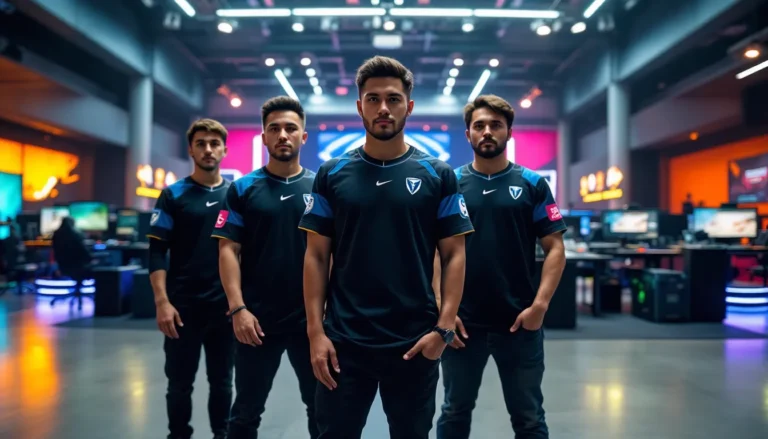
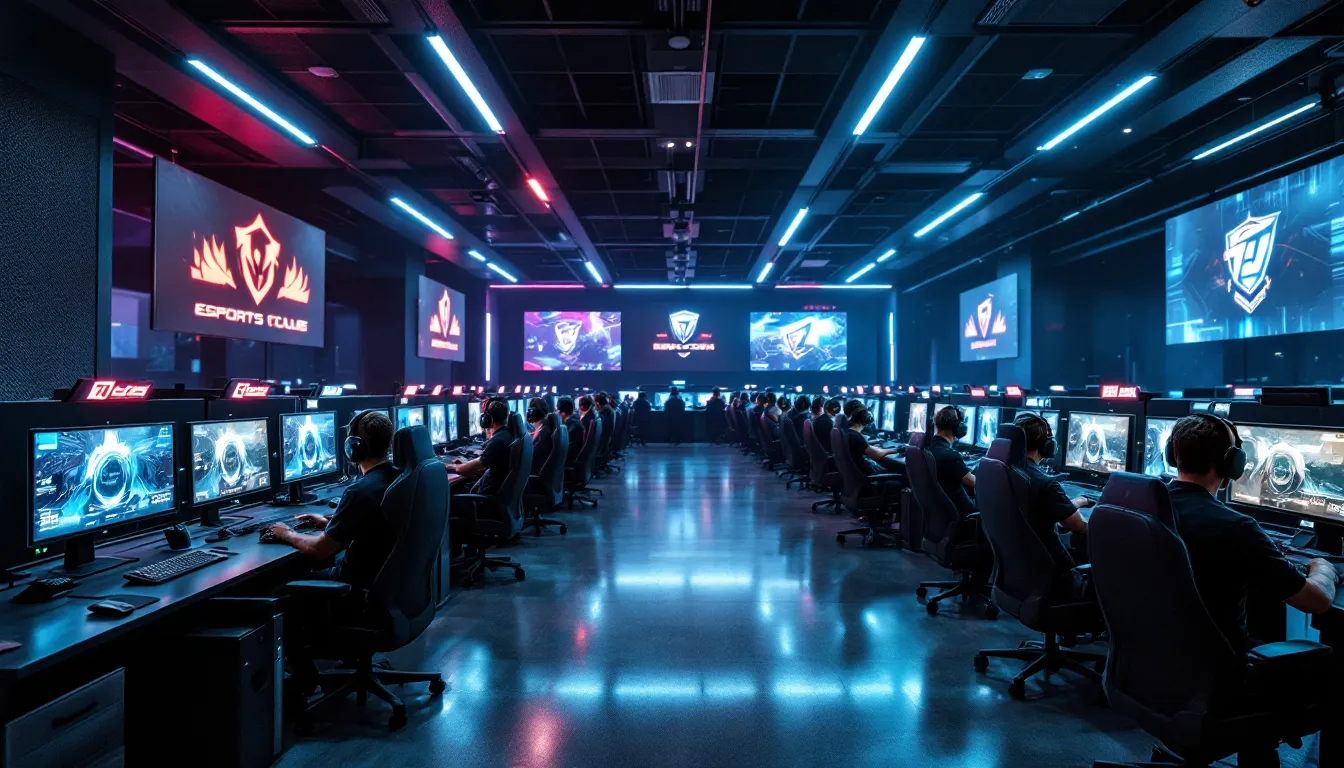

The esports infrastructure has evolved dramatically over the past few years. What started as basement LAN parties and cramped gaming cafes has transformed into purpose-built facilities with professional-grade equipment, coaching staff, and competitive environments that rival traditional sports training centers. Whether you’re a casual gamer looking to improve your skills, a competitive player preparing for tournaments, or someone considering opening a facility, understanding what makes an esports center tick is essential.
Esports centers have become the backbone of regional gaming communities and professional development pipelines. They offer something online play can’t replicate: face-to-face interaction, high-end hardware, stable connections, and an atmosphere built specifically for performance. In 2026, these facilities range from small neighborhood gaming hubs to massive multi-story complexes hosting international tournaments. This guide breaks down everything you need to know about esports centers, from what they offer to how to choose the right one for your needs.
Key Takeaways
- An esports center is a dedicated physical space with professional-grade equipment, high-speed networks, and optimized environments that offer competitive advantages impossible to replicate through home gaming setups.
- Top-tier esports centers invest in RTX 4080+ GPUs, 240Hz+ monitors with 1ms response times, redundant fiber connections delivering 3-8ms ping, and proper ergonomic setups to ensure consistent tournament-standard performance.
- Esports centers serve multiple functions—from community gaming hubs and bootcamp training facilities to tournament venues—with hybrid models maximizing revenue through membership fees, hourly rentals, team bookings, and event hosting.
- Training at an esports center accelerates skill development through access to professional equipment, in-person mentorship, structured coaching programs, and organic networking with competitive players and scouts.
- Starting an esports center requires $250,000–$500,000 initial investment including hardware, network infrastructure, facility build-out, and reserve capital, with break-even typically achieved within 12–24 months through diversified revenue streams.
- Future esports center growth depends on integrating emerging technologies like VR gaming stations, prioritizing sustainability through energy-efficient components, and expanding mobile gaming facilities to serve diverse global markets.
What Is an Esports Center?
Defining the Modern Esports Facility
An esports center is a dedicated physical space designed for competitive gaming, training, and community engagement. Unlike your home setup, these facilities provide access to high-end gaming PCs, consoles, and peripherals in a controlled environment optimized for performance. Most centers feature rows of gaming stations equipped with 240Hz+ monitors, mechanical keyboards, high-DPI mice, and gaming chairs built for extended sessions.
The modern esports facility serves multiple purposes simultaneously. It functions as a training ground for aspiring pros, a social space for local gaming communities, and a venue for tournaments ranging from grassroots events to regional qualifiers. Many centers also incorporate streaming rooms, coaching areas, and lounges where players can review VODs or discuss strategy between matches.
Funding models vary widely. Some centers operate as membership-based clubs, others charge hourly rates similar to traditional internet cafes, and a few are sponsored by gaming organizations or hardware manufacturers. The best facilities invest heavily in infrastructure, not just hardware, but also network stability, HVAC systems to manage heat from dozens of high-performance PCs, and soundproofing to minimize distractions.
Key Differences Between Esports Centers and Traditional Gaming Cafes
While traditional gaming cafes focus primarily on casual play and social gaming, esports centers prioritize competitive performance and skill development. The hardware gap alone is significant: a typical gaming cafe might run mid-tier GPUs and 60Hz monitors to keep costs down, while esports centers invest in RTX 4080+ graphics cards, AMD Ryzen 9 or Intel i9 processors, and displays with 1ms response times.
Network infrastructure sets them apart even more dramatically. Gaming cafes often share standard business internet connections, which can bottleneck under heavy load. Esports centers deploy dedicated fiber connections with redundancy, low-latency routing, and sometimes even direct peering agreements with game servers. Ping matters when you’re training for competitive play, and the difference between 5ms and 35ms can determine whether you hit Radiant or stay stuck in Diamond.
The atmosphere differs fundamentally too. Gaming cafes encourage hanging out, browsing, and casual sessions. Esports centers cultivate a training mentality, they’re quieter, more focused, with rules about behavior and often designated practice times for teams. Many enforce voice comms etiquette and ban distracting activities during peak competitive hours. Some facilities even have separate zones: casual areas for community play and isolated bootcamp rooms for serious training.
Types of Esports Centers and Their Primary Functions
Professional Training and Bootcamp Facilities
Bootcamp facilities cater specifically to professional and semi-professional teams preparing for major tournaments. These centers offer private rooms where full five-player rosters can scrim for 10-12 hours daily without external interruptions. Equipment matches or exceeds tournament standard specs, ensuring players don’t encounter any hardware surprises during actual competition.
Security and privacy are paramount in bootcamp centers. Teams don’t want competitors knowing their practice schedules, new strategies, or roster experiments. Top facilities carry out soundproofing between rooms, NDA requirements for staff, and sometimes even signal-blocking tech to prevent leaks. Many also provide on-site coaching staff, nutritionists, and mental performance consultants.
Pricing for bootcamp facilities runs considerably higher than community centers, often $2,000-$5,000 per week for a full team setup, including accommodations if the facility has dormitory-style housing. Organizations like Team Liquid, Cloud9, and international teams routinely book these spaces before major events like Worlds, The International, or CS2 Majors.
Community Gaming Hubs and LAN Centers
Community-focused esports centers prioritize accessibility and social gaming. These facilities welcome players of all skill levels, from Bronze newcomers to Masters players looking for local competition. Hourly rates typically range from $3-$8 depending on location and equipment tier, with discounts for students or off-peak hours.
LAN centers specialize in multiplayer experiences that benefit from zero-latency local connections. Fighting game communities particularly value these spaces, playing Street Fighter 6 or Tekken 8 on local setups eliminates the rollback netcode variability that plagues online play. Weekly tournaments, ladder competitions, and community events keep regulars engaged and attract new players.
These hubs often become the heartbeat of regional gaming scenes. They host launch parties for major releases, viewing parties for international tournaments, and grassroots competitions that feed into regional qualifier pipelines. The social aspect matters as much as the gaming, friendships formed at LAN centers often evolve into long-term teams and competitive rosters.
Tournament and Event Venues
Dedicated tournament venues are built around spectator experiences and broadcast production. These facilities feature main stages with professional lighting, multi-camera setups, and seating for anywhere from 100 to 5,000+ spectators depending on the venue’s scale. The largest venues rival traditional sports arenas in production capability.
Backstage infrastructure includes player warm-up areas, admin rooms for tournament officials, and dedicated spaces for referees monitoring matches for rule violations or technical issues. Network design becomes even more critical, tournaments require isolated player networks separated from spectator WiFi to prevent interference or DDoS attacks.
Venues like the Esports Stadium Arlington in Texas, LEC Studio in Berlin, and various OGN facilities in South Korea exemplify purpose-built tournament centers. They’re designed for maximum flexibility, with modular stages that can be reconfigured for different games. One weekend might host a League of Legends regional qualifier, the next a Rocket League championship, and the following week a multi-game fighting game convention.
Hybrid Centers Combining Multiple Functions
The most successful esports centers in 2026 embrace hybrid models that serve multiple audience segments simultaneously. A typical hybrid facility might dedicate 60% of its space to community gaming stations, reserve 20% for private team rooms bookable by the hour, and maintain 20% as a small tournament stage for local events.
This approach maximizes revenue streams and facility utilization. During weekday afternoons, the tournament stage might host school esports programs. Evenings bring competitive teams for scrims. Weekends feature public tournaments that drive traffic to the community gaming area. The best hybrid centers adjust their layouts seasonally based on demand, expanding bootcamp capacity before major tournament seasons and opening up more community space during summer months.
Revenue diversification helps these facilities weather the volatility of the esports market. Membership fees provide baseline income, hourly station rentals add volume, team bookings offer premium pricing, and tournament hosting generates both direct revenue and marketing value. Some hybrid centers also run pro shops selling peripherals, apparel, and energy drinks, or partner with food delivery services for commission-based revenue.
Essential Features and Equipment in Top-Tier Esports Centers
Gaming Hardware and PC Specifications
Hardware standards in competitive esports centers have plateaued at a high level. Most top facilities now standardize on similar specs: RTX 4080 or RX 7900 XTX GPUs, Intel i9-14900K or AMD Ryzen 9 7950X processors, 32GB DDR5 RAM, and NVMe SSDs with read speeds exceeding 5,000 MB/s. This ensures consistent performance across all titles, from the CPU-intensive simulation of CS2 to the GPU-heavy rendering of Valorant or Apex Legends.
Peripherals matter as much as core components. Competitive players are particular about gear, so quality centers stock multiple options: Logitech G Pro X Superlight, Razer Viper V3 Pro, and Finalmouse variants for mice: SteelSeries Apex Pro, Wooting 60HE, and Corsair K70 keyboards: HyperX Cloud III, SteelSeries Arctis Nova Pro, and Logitech G Pro X 2 headsets. Letting players choose peripherals that match their home setups reduces adjustment time and improves performance.
Monitor specs have become non-negotiable for serious facilities: 240Hz minimum refresh rate, 1ms GTG response time, and either 1080p for maximum frame rates or 1440p for games where visual clarity matters more than raw speed. Brands like BenQ Zowie, ASUS ROG, and Alienware dominate the esports center market. Some facilities even provide controller stations with Xbox Elite Series 2 or PlayStation DualSense Edge controllers for console titles and controller-preferred PC games like Rocket League or EA Sports FC 25.
High-Speed Internet and Network Infrastructure
Network infrastructure separates amateur setups from professional facilities. Top esports centers deploy multiple redundant fiber connections from different ISPs to ensure uptime even if one provider experiences outages. Total bandwidth typically exceeds 10Gbps for facilities with 50+ stations, with traffic shaping and QoS policies prioritizing gaming packets over background activities.
Latency optimization goes beyond just fast connections. Quality centers use enterprise-grade routers and switches with advanced bufferbloat mitigation, direct peering arrangements with major game server providers, and sometimes even co-location agreements that reduce routing hops. The difference shows in ping times: home connections might average 25-45ms to game servers, while properly configured esports centers consistently hit 3-8ms to regional servers.
Wired connections are mandatory for competitive play, WiFi introduces too much jitter and packet loss variability. Every gaming station gets dedicated Cat6a or Cat7 Ethernet with isolated VLANs to prevent one station’s issues from affecting others. Network monitoring tools track packet loss, ping spikes, and bandwidth usage in real-time, allowing staff to identify and resolve issues before players notice problems.
Streaming and Broadcasting Capabilities
Many esports centers now include dedicated streaming rooms and broadcast suites. These spaces feature professional cameras (Sony A7S III or Panasonic Lumix GH6 models are popular), broadcast-grade audio interfaces, acoustic treatment, and RGB lighting systems for brand-consistent color matching. Players can book these rooms to create content, record VOD reviews, or stream practice sessions to build their personal brands.
Broadcast infrastructure for tournament hosting requires significant investment. Multi-camera switching systems, instant replay servers, observer workstations, overlay graphics computers, and audio mixing boards form the backbone of professional production. Software varies by facility, but most use OBS Studio or vMix for production, with plugins for game-specific overlays and sponsor integration.
Upload bandwidth becomes the bottleneck for streaming-focused facilities. Broadcasting multiple simultaneous 1080p60 or 4K30 streams demands substantial upload capacity, facilities offering this service typically reserve 25-40% of total bandwidth for outbound streaming traffic. Some centers partner with platforms like Twitch, YouTube Gaming, or Kick for co-promotion, receiving priority support and sometimes revenue sharing for facility-hosted content.
Comfortable Gaming Stations and Ergonomic Setup
Ergonomics directly impact performance during extended gaming sessions. Quality esports centers invest in proper gaming chairs, not just for comfort, but for maintaining posture and reducing fatigue. Secretlab Titan Evo 2022, Herman Miller x Logitech Embody, and Noblechairs HERO series dominate high-end facilities. Adjustable height desks let players match their preferred setup, critical for muscle memory when switching between home and facility practice.
Station spacing matters more than many facility planners realize. Cramming stations too close together creates distractions, peripheral vision interference, and acoustic bleed between headsets. Top centers maintain 4-5 feet between station centers, use monitor privacy shields or dividers, and design layouts that minimize players sitting directly in each other’s eyelines.
Ambient conditions affect both comfort and hardware performance. HVAC systems need to handle the thermal load from dozens of high-performance PCs running simultaneously, inadequate cooling leads to thermal throttling and inconsistent frame rates. Proper facilities maintain 68-72°F temperatures, humidity between 40-60%, and positive air pressure to reduce dust accumulation. Air filtration prevents buildup on components, extending hardware lifespan and maintaining performance.
Benefits of Training at an Esports Center
Access to Professional-Grade Equipment
The hardware advantage alone justifies esports center costs for many players. Not everyone can afford a $3,000-$4,000 gaming rig at home, but for $5-$8 per hour, they can access equipment that matches or exceeds what pros use in tournaments. This levels the playing field, your mechanics and game sense matter more than whether you can afford the latest hardware.
Consistency matters for competitive development. Practicing on 60Hz at home and competing on 240Hz at tournaments creates adjustment periods that hurt performance. Regular training at an esports center builds muscle memory on tournament-standard equipment. Frame rates, input lag, monitor size, peripheral response, all these factors remain constant, letting players focus purely on skill development rather than adapting to different hardware.
Testing and experimentation become accessible. Want to know if switching from a 400 DPI / high in-game sens setup to 800 DPI / low sens improves your aim? Need to compare ultrawide vs. standard 16:9 monitors for competitive advantage? Esports centers let you experiment with different configurations without buying equipment you might not like. Many competitive players credit facility access with helping them dial in their optimal settings.
Networking and Community Building Opportunities
Finding teammates organically remains one of the biggest challenges in competitive gaming. Online matchmaking throws random players together, but building genuine team chemistry requires repeated interaction. Esports centers create environments where players naturally connect, run into each other repeatedly, and form relationships that evolve into competitive rosters.
Local tournaments and leagues hosted at esports centers serve as talent showcases. Performing well attracts attention from established teams looking for new members or organizations scouting for players to sign. Major esports coverage platforms regularly highlight standout performances at regional events, and scouts from professional teams monitor these competitions for emerging talent.
Mentorship happens naturally in physical spaces. Watching a higher-ranked player practice in person reveals details that don’t translate through streams, how they position their hands, their keyboard grip, when they check the minimap, how they adjust their posture during clutch moments. Many centers foster mentorship cultures where experienced players help newcomers, creating skill development pipelines that benefit the entire local scene.
Coaching and Skill Development Programs
Many esports centers now employ professional coaches or partner with coaching services. These aren’t just high-ranked players offering generic advice, they’re analysts who review VODs, identify specific mistakes, design training regimens, and track improvement over time. Structured coaching accelerates development far beyond solo queue grinding.
Skill development programs target specific aspects of gameplay. Aim training schedules using Aimlabs or Kovaak’s, map knowledge workshops, positioning drills, and communication exercises all help players address weaknesses systematically. Some centers run boot camp-style intensive training programs: two-week sessions with daily coaching, structured practice blocks, and performance evaluations.
Group training sessions offer cost-effective alternatives to one-on-one coaching. Team-wide sessions focusing on macro strategy, shot-calling, or meta adaptation help entire rosters improve together. For games like League of Legends where understanding your teammates’ tendencies matters as much as individual mechanics, group coaching at esports centers produces better results than solo practice.
How to Choose the Right Esports Center for Your Needs
Evaluating Location and Accessibility
Proximity determines how often you’ll actually use an esports center. A facility 15 minutes away gets used 3-4x per week: one requiring a 45-minute commute might see monthly visits. Urban centers benefit from public transit access, parking availability and costs matter in dense cities. Facilities near universities or high schools often thrive thanks to walk-in traffic from students.
Operating hours shape accessibility as much as location. Centers catering to serious competitive players often run 24/7 or maintain late-night hours (open until 2-4 AM), accommodating practice schedules around work or school. Family-oriented community centers typically close by 10-11 PM and may have restricted hours during weekdays.
Safety and neighborhood context matter, especially for younger players or those visiting late at night. Check reviews for mentions of parking security, lighting, and general area safety. The best facilities invest in security cameras, well-lit parking areas, and staff trained in conflict de-escalation.
Comparing Pricing Models and Membership Options
Pricing structures vary dramatically between facilities. Common models include:
- Hourly rates: $4-$10 per hour, best for occasional visits
- Day passes: $15-$25 for unlimited daily access
- Monthly memberships: $50-$150 for unlimited access plus perks
- Premium memberships: $200-$400 with reserved stations, private rooms, priority booking
- Team packages: $500-$2,000 monthly for dedicated team spaces
Do the math based on your intended usage. If you’ll visit 3+ times weekly for 3-4 hours per session, monthly memberships usually deliver better value than hourly rates. Compare what’s included: some memberships cover peripheral rentals and tournament entry fees, others charge extra for these services.
Hidden costs add up. Some centers charge separately for premium peripherals, private rooms, or coaching services. Tournament entry fees, team room bookings, and guest passes may or may not be included in membership tiers. Read the fine print and calculate total monthly costs based on realistic usage patterns.
Assessing Game Selection and Platform Support
Game selection determines whether a center meets your specific needs. PC-focused facilities typically offer League of Legends, Valorant, CS2, Dota 2, Overwatch 2, and Apex Legends as standard. Fighting game enthusiasts need centers with console stations for Street Fighter 6, Tekken 8, and Guilty Gear Strive. Some games have niche audiences, if you’re grinding StarCraft II or Rainbow Six Siege, confirm the center supports and has active communities for those titles.
Platform variety matters for multi-game competitors. Centers supporting PC, PlayStation 5, Xbox Series X, and Nintendo Switch accommodate more players and game types. Many tournament results tracked by specialized esports coverage platforms depend on platform-specific competition, so training on the right system matters for qualification paths.
Check whether centers allow you to log into personal accounts and use your own settings. Some facilities require playing on facility accounts with limited customization, which hampers serious training. The best centers let you load your config files, sync cloud settings, and play exactly as you would at home or in tournament environments.
Notable Esports Centers Around the World in 2026
Leading Facilities in North America
Esports Stadium Arlington in Texas remains North America’s largest dedicated esports venue, with 100,000 square feet including a 2,500-seat main arena. The facility hosts everything from high school competitions to professional Call of Duty League matches. Its community gaming area runs daily with 80+ stations, while the broadcast production suite handles multi-game tournament streaming simultaneously.
Fortress Esports locations across major Canadian cities (Toronto, Vancouver, Montreal) have built strong reputations for community development and player pathway programs. Their hybrid model combines public gaming areas, private team rooms, and small tournament spaces. Fortress facilities have produced numerous players who’ve advanced to Tier 2 and Tier 1 professional circuits.
Super League Gaming centers embedded within Walmart locations represent an interesting accessibility experiment. These facilities offer budget-friendly access ($5-$7 hourly) in suburban and rural areas previously underserved by esports infrastructure. While equipment specs run mid-tier rather than professional-grade, they’ve introduced thousands of new players to competitive gaming.
Los Angeles hosts multiple high-end facilities, including Complexity Gaming’s GameStop Performance Center, which serves as both the team’s headquarters and a community training facility. The center features separate wings for professional team practice and public access, with shared streaming and content creation resources.
Top Esports Centers in Asia and the Pacific
South Korea maintains its position as the global leader in esports infrastructure density. OGN Studio in Seoul hosts professional League of Legends matches and dozens of other competitions throughout the year. The facility’s 500+ community gaming stations across multiple floors see thousands of daily visitors. For players following competitive circuits tracked by specialized League coverage platforms, OGN represents the gold standard for tournament venues.
T1 Headquarters in Seoul combines training facilities for one of the world’s most successful esports organizations with public-facing gaming areas and a merchandise shop. Visitors can watch professional teams practice through observation windows while using the same hardware specs in public areas.
China’s massive esports market supports hundreds of high-end facilities. LGD Gaming Centers across major cities offer provincial-level tournament hosting alongside community gaming. Shanghai’s V5 Gaming Complex includes a 1,000-seat arena, hotel accommodations, and training facilities used by multiple professional teams.
Australia’s Fortress Melbourne opened in early 2025 as the region’s largest dedicated esports venue, with 1,000 capacity for tournaments and 150 community gaming stations. The facility has become the primary host for Oceanic regional qualifiers across multiple titles.
European Gaming Hubs Making an Impact
LEC Studio in Berlin serves as the home of European League of Legends competition. While primarily a broadcast facility, it offers limited public access during off-season and hosts community events. The production quality standards set here influence facility design across Europe.
Finland’s ENCE Gaming Center in Helsinki combines professional team facilities with public access. The Nordic countries’ strong gaming culture supports multiple smaller regional centers, creating dense infrastructure networks. ENCE’s facility has become a template for team-operated hybrid centers.
Belong Gaming Arenas operate 25+ locations across the UK, typically in partnership with Game retail stores. Their tournament series feed into national championships with prize pools and professional exposure. The accessibility-focused model prioritizes community building over cutting-edge specifications.
Germany’s SK Gaming Hub in Cologne hosts regular community tournaments and serves as a social center for the region’s massive gaming population. Insights from competitive Counter-Strike coverage on specialized match tracking platforms often feature players who developed skills at facilities like SK Gaming Hub before advancing to professional circuits.
Netherlands’ Team Liquid Alienware Training Facility in Utrecht represents the high-end partnership model between esports organizations and hardware sponsors. Professional-grade specs throughout, with separate wings for Team Liquid’s roster and public/community access areas.
Starting Your Own Esports Center: Key Considerations
Initial Investment and Budget Planning
Starting a mid-sized esports center (30-50 stations) requires substantial capital. Initial investment typically ranges from $250,000 to $500,000, depending on location, build-out requirements, and equipment tier. Breaking down major expense categories:
- Hardware: $2,500-$4,000 per complete station (PC, monitor, peripherals, chair, desk)
- Network infrastructure: $15,000-$30,000 for enterprise switches, routers, cabling
- Facility build-out: $50,000-$150,000 for HVAC upgrades, electrical capacity, soundproofing, lighting
- Furniture and fixtures: $20,000-$40,000 for reception, lounge areas, storage
- Initial inventory: $5,000-$10,000 for replacement peripherals, cables, accessories
- Reserve capital: 6-12 months operating expenses ($75,000-$150,000)
Many successful centers start smaller, 10-15 stations with a $75,000-$125,000 initial investment, then expand as revenue stabilizes. This approach reduces risk and lets you test market demand before committing to large-scale expansion.
Revenue projections depend heavily on utilization rates and pricing models. A 30-station center averaging 60% utilization at $6/hour generates approximately $9,500 monthly from hourly usage alone. Add memberships, tournament hosting, coaching fees, and retail sales to reach break-even, typically requiring 12-24 months.
Hardware refresh cycles factor into long-term budgeting. Plan to replace or significantly upgrade equipment every 3-4 years to maintain competitive standards. Some centers lease equipment to spread costs and simplify upgrades, though total costs typically run 20-30% higher than purchasing outright.
Licensing, Permits, and Legal Requirements
Legal requirements vary by jurisdiction, but most esports centers need several permits and licenses. Standard requirements include:
- Business license: Basic municipal operating permit
- Certificate of occupancy: Confirming the space meets commercial building codes
- Food service permits: If selling snacks, beverages, or partnering with food vendors
- Music licensing: ASCAP, BMI, or SESAC licenses if playing background music
- Liability insurance: Covering equipment, injuries, and property damage
- Internet cafe licenses: Some jurisdictions classify esports centers as internet cafes with specific regulations
Zoning restrictions can derail plans before you start. Confirm your chosen location allows entertainment or amusement business operations. Some residential-adjacent zones prohibit late-night operations or impose noise restrictions that complicate esports center operation.
Age restrictions and minor supervision policies require careful planning. If serving under-18 players, many regions require verified parental consent forms, supervision policies, and content filtering on systems. Some operators restrict certain hours to 18+ only to simplify compliance and create different atmosphere options.
Publisher licensing remains a gray area. Most games’ Terms of Service technically prohibit commercial use without specific agreements, though enforcement is inconsistent. Major publishers including Riot Games, Valve, and Blizzard offer licensed programs for commercial gaming centers. Participating in these programs ensures legal compliance and sometimes provides marketing support, beta access, or prize pool funding for tournaments.
Marketing Strategies to Attract Gamers and Teams
Local presence matters more than digital marketing for esports centers. Partner with nearby universities, high schools with esports programs, and gaming-focused student organizations. Offer team rates for school programs, host educational workshops, and sponsor local tournaments to build community recognition.
Tournament hosting drives traffic and creates marketing moments. Weekly or monthly competitions for popular titles attract participants who become regular customers. Stream tournaments online to reach broader audiences, successful tournament series covered by outlets focusing on competitive gaming coverage generate organic marketing value far exceeding paid advertising costs.
Social media strategy should emphasize community and player achievements rather than generic promotional content. Highlight members reaching new ranks, team victories, tournament results, and facility improvements. Player testimonials and user-generated content outperform corporate-style announcements.
Partnership opportunities with hardware vendors can offset costs and boost credibility. Companies like ASUS ROG, HyperX, Logitech, and SteelSeries sometimes provide sponsored equipment, marketing support, or co-branding opportunities for facilities meeting certain standards. These relationships lend legitimacy and can provide equipment upgrade paths as new products launch.
Influencer and content creator partnerships bring immediate visibility. Invite local streamers or competitive players to host events, create content at your facility, or participate in show matches. Even micro-influencers with 1,000-5,000 followers can drive significant local traffic when their audiences are geographically concentrated.
Grand opening events should target multiple audience segments simultaneously. Host free play hours for casual gamers, invitational tournaments for competitive players, and partner showcases for potential corporate clients or team customers. Creating FOMO (fear of missing out) around launch events builds momentum that carries into regular operations.
The Future of Esports Centers and Emerging Trends
Virtual Reality and Augmented Reality Integration
VR esports remains niche in 2026, but forward-thinking facilities are beginning to integrate VR zones. Games like Breachers, Contractors Showdown, and Synth Riders have established competitive scenes, while VR versions of traditional sports attract different demographics. Equipment costs remain high, a single high-end VR station costs $3,000-$5,000, but declining hardware prices and improving content libraries make VR increasingly viable.
The physical space requirements for VR present challenges. Each station needs 10×10 feet of clear space minimum, dramatically reducing station density compared to traditional PC setups. Mixed-use spaces that convert between PC gaming during peak hours and VR experiences during off-peak periods maximize utilization.
AR integration for spectator experiences represents another emerging trend. Facilities are experimenting with AR overlays that let in-person spectators see player perspectives, real-time stats, and strategic overlays while watching competitive matches. This technology bridges the gap between watching online (with production overlays) and attending live events.
Sustainability and Eco-Friendly Gaming Spaces
Environmental sustainability is becoming a competitive differentiator as younger gamers increasingly value eco-conscious businesses. Energy consumption in esports centers is substantial, 50 gaming PCs running simultaneously draw 25-40kW continuously. Forward-thinking facilities are implementing several sustainability measures:
- Solar panel installations: Offsetting grid consumption during peak hours
- Energy-efficient components: Using 80+ Platinum or Titanium rated PSUs, efficient LED lighting
- Smart power management: Automatically shutting down or hibernating unused stations
- Heat recovery systems: Using PC exhaust heat for building HVAC in winter months
- E-waste recycling programs: Partnering with responsible recyclers for hardware disposal
Green certifications like LEED or local equivalents help market sustainability efforts and may qualify facilities for tax incentives or utility rebates. Some centers advertise carbon-neutral operations through offset purchases or renewable energy certificates, though effectiveness of these programs varies.
Sustainability messaging resonates particularly well with younger demographics and can justify premium pricing. Players increasingly prefer supporting businesses aligned with their values, even if it means paying slightly higher hourly rates or membership fees.
The Rise of Mobile Esports Training Facilities
Mobile esports titles like PUBG Mobile, Mobile Legends, Free Fire, and Honor of Kings dominate player numbers globally, particularly in Asia and emerging markets. Purpose-built mobile gaming facilities are emerging as distinct from PC/console esports centers.
Mobile esports centers require different infrastructure. Instead of expensive gaming PCs, facilities invest in high-end phones (iPhone 15 Pro Max, Samsung Galaxy S24 Ultra, ASUS ROG Phone 8 Pro), specialized controllers and accessories, and often custom cooling solutions to prevent thermal throttling during extended play. Initial station costs run $1,500-$2,500 compared to $3,000-$4,000 for PC setups.
The business model differs too. Mobile esports centers in Southeast Asia and Latin America often operate on membership models with hourly rates under $2, making them accessible to broader demographics than PC-focused facilities. Higher utilization rates and lower operational costs can generate profitable returns even though lower per-hour pricing.
Hybrid facilities supporting both mobile and PC gaming are becoming common in markets with strong mobile esports cultures. These centers allocate space based on local game preference ratios, a facility in the Philippines might dedicate 60% of space to mobile gaming and 40% to PC, while a U.S. facility might reverse those proportions.
Conclusion
Esports centers have evolved from glorified LAN cafes into legitimate training infrastructure that shapes competitive gaming landscapes. Whether you’re a player looking to improve, an entrepreneur considering opening a facility, or just curious about where competitive gaming happens, understanding these spaces provides insight into how modern esports ecosystems function.
The facilities that thrive long-term prioritize community over short-term profits. Hardware matters, but culture and atmosphere determine whether a center becomes the heartbeat of a local scene or just another place to play games. As the esports industry matures, these physical spaces become increasingly important for talent development, community building, and bridging the gap between casual play and professional competition.
The next few years will determine whether esports centers become permanent infrastructure like traditional gyms and sports facilities, or remain niche amenities serving hardcore competitors. Current trajectories suggest growing mainstream acceptance, but success requires adapting to changing games, technologies, and player preferences. The facilities that stay relevant are the ones that listen to their communities and evolve alongside the games and players they serve.