
The esports industry pulled in over $1.8 billion in revenue last year, and behind every championship roster is a coach who turned raw talent into coordinated dominance. While players get the spotlight and the highlight reels, esports coaches are the architects, they dissect replays frame by frame, call timeout during critical drafts, and turn five individuals into a single, lethal unit.
If you’ve ever wondered what it takes to move from the player seat to the coach’s headset, you’re in the right place. Coaching in competitive gaming isn’t just about being good at the game anymore. It’s about reading the meta before it shifts, managing egos under tournament pressure, and translating thousands of hours of gameplay into actionable strategy. Whether you’re eyeing a spot on a tier-one League of Legends roster or looking to help up-and-coming talent in Valorant, this guide breaks down exactly what the role demands, how to break in, and what the career actually looks like in 2026.
Key Takeaways
- An esports coach operates at the macro level—dissecting opponent VODs, coordinating scrims, and developing individual players—making strategic decisions that turn five individuals into a coordinated unit.
- Becoming an esports coach requires deep game knowledge, communication skills, and analytical thinking; most successful coaches were high-level competitive players before transitioning to coaching roles.
- Entry-level esports coaches earn $500–$1,500 monthly, while head coaches at major leagues command $70,000–$150,000+ annually, with elite coaching positions reaching $200,000+ when bonuses are included.
- Unlike traditional sports coaching, esports coaching demands constant adaptation due to biweekly meta shifts, making flexibility and continuous learning essential to stay competitive.
- Breaking into esports coaching requires a multi-step approach: master your game’s competitive scene, gain hands-on experience with amateur teams, build a public portfolio through content creation, and network actively within the esports community.
- Mental performance and wellness coaching represents one of the fastest-growing niches in esports, addressing player burnout, tilt management, and physical health concerns from extended screen time.
What Is an Esports Coach?
An esports coach is a professional responsible for developing player skill, crafting team strategy, and optimizing performance in competitive gaming environments. They work with rosters across titles like League of Legends, CS2, Valorant, Dota 2, and fighting games, translating high-level game knowledge into wins.
Unlike a solo player grinding ranked, a coach operates at the macro level. They identify weaknesses in opponent tendencies, coordinate scrims against practice partners, and ensure their team is prepped for every possible scenario, whether that’s a surprise pocket pick in draft or an off-meta agent composition that counters the current patch.
Roles and Responsibilities of an Esports Coach
The day-to-day varies depending on the org and title, but core responsibilities include:
- Draft and strategy preparation: Studying opponent VODs, ban priorities, and team tendencies to build winning game plans.
- Scrim management: Organizing practice blocks, setting goals for each session, and reviewing performance afterward.
- Individual player development: Working one-on-one to refine mechanics, decision-making, and champion/agent pools.
- In-game leadership: Making live calls during drafts, timeouts, or between maps (depending on the game and league rules).
- Team cohesion and morale: Managing interpersonal dynamics, resolving conflicts, and keeping motivation high during rough stretches.
Some coaches also handle logistics, travel schedules, bootcamp planning, and coordination with analysts or support staff. On smaller orgs, you might be wearing all those hats at once.
How Esports Coaching Differs From Traditional Sports Coaching
Esports coaching shares DNA with traditional sports, but the pace and structure are different.
First, the meta shifts constantly. A League of Legends coach might spend weeks perfecting a bot lane duo, only for Riot to drop a patch that nerfs the ADC into irrelevance. Traditional sports don’t have balance updates every two weeks that fundamentally change optimal strategy.
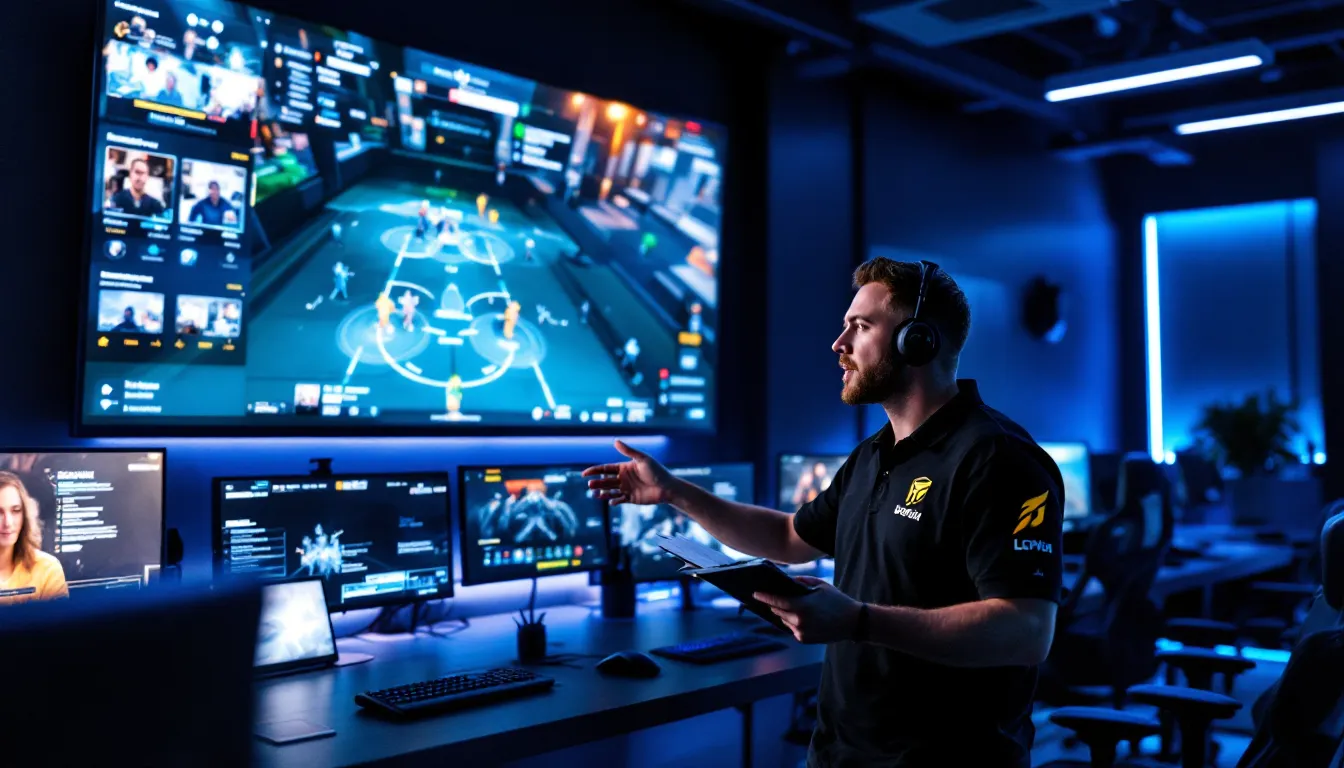
Second, esports coaching leans heavily on data and replay analysis. Coaches spend hours in VOD review tools, scrubbing through teamfights frame by frame, tracking cooldown usage, and spotting positioning errors invisible in real time. It’s closer to film study in football, but with the added layer of constantly evolving game mechanics.
Third, player age and career span differ. Most esports pros peak in their late teens to mid-twenties, and burnout is a constant risk. Coaches often work with players who are younger, less experienced with professional environments, and dealing with intense public scrutiny on social media. That adds a mentorship and mental health component that’s critical to the role.
Types of Esports Coaches
Esports coaching isn’t a monolith. Depending on the organization’s size and budget, coaching staff can range from a single person doing everything to a full roster of specialized roles.
Head Coach vs. Assistant Coach
The head coach is the final decision-maker on strategy, roster moves, and in-game calls. They set the vision for how the team plays, make the tough calls during draft phases, and take responsibility when things go south. In League of Legends, for example, the head coach often steps on stage during Worlds to oversee the pick/ban phase.
Assistant coaches support the head coach by handling specific responsibilities, running individual practice sessions, managing scrim schedules, or focusing on a subset of players (like working exclusively with the support and jungle duo). They’re also the succession pipeline: many head coaches started as assistants.
Analyst and Strategic Coaches
Analysts dive deep into data. They track enemy team tendencies, build scouting reports, and use tools like replay software and stat dashboards to identify patterns. In tactical shooters like CS2, an analyst might chart out every site execute an opponent runs, noting utility usage, timing, and default setups.
Strategic coaches take that data and turn it into game plans. They work closely with the head coach to design counters, prepare adaptations for mid-series adjustments, and develop new strategies that exploit meta gaps. On top-tier teams, this role is often separate from the head coach to allow deeper specialization.
Mental Performance and Wellness Coaches
This is one of the fastest-growing coaching niches in esports. Mental performance coaches help players manage tilt, maintain focus under pressure, and build resilience during losing streaks. They might work on breathing techniques, pre-game routines, or cognitive reframing to keep mental sharp during long tournaments.
Wellness coaches focus on physical health, sleep hygiene, nutrition, and avoiding burnout. With players spending 10+ hours a day in front of screens, wrist health, posture, and eye strain are real concerns. Some orgs bring in physical trainers or partner with sports science experts to keep players in peak condition.
Essential Skills Every Esports Coach Needs
You don’t need a sports science degree to coach esports, but you do need a specific skill set that blends game expertise, interpersonal savvy, and strategic vision.
Deep Game Knowledge and Competitive Understanding
This is table stakes. A League coach needs to understand wave management, jungle pathing, vision control, and how champion matchups shift across patches. A Valorant coach needs to know lineups, agent synergies, economy management, and site-take timings.
But it’s not just about playing the game well yourself. You need to understand the competitive scene: what’s working at the highest level, why certain teams are dominant, and how strategies evolve as the meta develops. Watching pro matches, studying VODs, and staying plugged into balance changes is non-negotiable.
Communication and Leadership Abilities
You can have the perfect game plan, but if you can’t communicate it clearly under pressure, it’s useless. Coaches need to explain complex concepts in ways that click for different learning styles, some players respond to visual diagrams, others need hands-on practice, and some just want the bottom line.
Leadership also means managing personalities. Rosters are full of competitive, high-ego players who don’t always agree. A good coach mediates conflicts, keeps everyone aligned on team goals, and knows when to push hard versus when to ease off.
Analytical and Strategic Thinking
Esports coaching is a constant puzzle. You’re reading opponent tendencies, predicting meta shifts, and finding edges that others miss. That requires pattern recognition, critical thinking, and the ability to adapt on the fly when your initial read was wrong.
Many coaches who thrive in esports come from backgrounds in competitive gaming themselves, but some also bring experience from traditional sports, data analysis, or even military strategy. The common thread is the ability to break down complexity into executable plans.
Player Development and Mentorship
Coaching isn’t just about winning the next match, it’s about developing players over time. That means identifying skill gaps, creating practice drills, and tracking improvement across weeks and months.
It also means mentorship. Many esports pros are teenagers navigating their first professional environment. Coaches often serve as career advisors, helping players think long-term about skill development, branding, and life after competition. The best coaches build trust and create an environment where players feel safe to take risks and make mistakes.
How to Become an Esports Coach
Breaking into esports coaching is part skill, part hustle, and part timing. There’s no single path, but here’s the most reliable roadmap based on how coaches in 2026 actually got their start.
Step 1: Master Your Game and Competitive Scene
You don’t need to be Challenger or Radiant, but you do need deep competitive knowledge. Most successful coaches were high-level players at some point, Diamond+ in League, Immortal+ in Valorant, or high-level competitive experience in their respective titles.
If you’re not at that rank, focus on becoming a student of the game. Watch pro matches religiously. Follow patch notes. Understand why teams draft the way they do and what makes certain strategies work. Supplement your gameplay with analytical depth, and you can make up for raw mechanical skill.
Step 2: Gain Coaching Experience
Start small. Offer free coaching to friends, lower-ranked players, or amateur teams looking to improve. Platforms like Discord communities, subreddit LFGs, and amateur leagues are full of players who’d love feedback from someone knowledgeable.
Record your sessions. Build a portfolio of before-and-after results. Did the player you coached climb two ranks? Did the amateur team you worked with win their local tournament? Document that. Esports orgs want proof you can deliver results, not just theory.
Consider volunteering with collegiate esports programs or semi-pro teams. Many universities now have esports programs that need coaching support, and it’s a great way to get hands-on experience in a structured environment.
Step 3: Build Your Reputation and Portfolio
Create content that showcases your knowledge. Start a YouTube channel breaking down pro matches, write strategy guides on Medium or your own site, or post analysis threads on Twitter/X and Reddit. Consistent, high-quality content builds credibility and gets you noticed.
If you’re deep into a specific game’s competitive scene, your analysis might get picked up by esports news outlets or shared by pro players. That’s social proof that opens doors.
Another route: compete in coaching competitions or join analyst communities. Some tournaments and leagues host coaching showcases or analyst draft events where aspiring coaches can demonstrate their skills publicly.
Step 4: Network Within the Esports Community
Esports hiring is relationship-driven. Coaches often get jobs because they know someone, or because they’ve been active in the scene long enough to build a reputation.
Attend LAN events, join Discord servers for your game’s competitive community, and engage with pros, analysts, and other coaches on social media. Don’t be a clout chaser, offer genuine value, ask smart questions, and be helpful. Relationships built over months of good-faith interaction lead to opportunities.
If you’re looking to coach in a specific title, follow the orgs and players closely. When roster changes happen or a team underperforms, that’s when coaching positions open up. Being known and respected in that ecosystem puts you on the shortlist.
Popular Games and Titles for Esports Coaching
Different games demand different coaching approaches. Here’s a snapshot of the most active coaching markets in 2026.
MOBA Games: League of Legends and Dota 2
League of Legends remains one of the biggest esports coaching markets. With regional leagues across NA, EU, Korea, China, and beyond, there are hundreds of teams, from tier-one orgs to amateur rosters, all looking for coaching talent. The game’s complexity (draft, macro, wave management, vision control) means there’s always demand for specialized esports coaching expertise.
Coaches often specialize by role or phase of the game. Some focus purely on draft strategy, others on mid-to-late macro, and some work exclusively with individual lanes. If you’re serious about coaching League, staying current with patches and understanding the global competitive schedule is essential.
Dota 2 has a smaller but deeply passionate coaching scene. The International offers massive prize pools, and top teams invest heavily in coaching infrastructure. Dota’s complexity, item builds, hero counters, and draft mind games, rewards coaches who can process enormous amounts of information quickly.
Tactical Shooters: CS2 and Valorant
CS2 (the evolution of CS:GO) is the granddaddy of tactical shooter esports. Coaching here is all about utility usage, map control, site executes, and anti-stratting opponents. The game’s longevity means there’s a mature coaching ecosystem, with orgs investing in full support staff including analysts, strategic coaches, and mental performance specialists.
Valorant exploded onto the scene and has become one of the most popular titles for coaching in 2026. The agent-based mechanics add a layer of complexity on top of CS-style gunplay. Coaches need to understand agent synergies, ultimate economy, and how compositions shift across patches. Riot’s aggressive tournament circuit and franchised league structure mean stable coaching opportunities for those who prove themselves.
Battle Royales and Fighting Games
Battle royales like Fortnite and Apex Legends present unique coaching challenges. With RNG, third-partying, and rotation decision-making, coaching focuses on positioning, zone reads, and clutch decision-making under chaos. Fortnite in particular has a young, rapidly evolving competitive scene where coaching talent is still developing.
Fighting games like Street Fighter 6 and Tekken 8 have traditionally been solo endeavors, but coaching is gaining traction. Coaches help players with matchup knowledge, frame data, and mental prep for high-pressure tournament sets. The fighting game community is tight-knit, and reputation matters a lot here.
Career Opportunities and Salary Expectations
Let’s talk money, job security, and what the career ladder actually looks like for esports coaches in 2026.
Where Esports Coaches Work
Most coaches work for professional esports organizations, teams competing in franchised leagues (League of Legends LCS/LEC, Valorant Champions Tour, Overwatch League) or major tournament circuits. These orgs range from massive brands like Team Liquid and Cloud9 to regional upstarts building rosters in emerging scenes.
Collegiate esports programs are another growing market. Universities across North America, Europe, and Asia now offer scholarships and competitive teams, and they need coaches to run those programs. Pay is typically lower than pro orgs, but the job stability is often better.
Independent coaching and content creation is viable for those with a strong personal brand. Some coaches offer one-on-one sessions, run bootcamps, or sell courses. Platforms like Metafy and Gamer Sensei connect coaches with players willing to pay for personalized improvement.
Finally, some coaches work in esports education and training facilities, specialized academies that train up-and-coming talent. These roles blend coaching with curriculum development and player scouting.
How Much Do Esports Coaches Earn?
Salaries vary wildly based on title, region, and org size.
- Entry-level or amateur coaches might work for free or earn $500–$1,500 per month, often part-time.
- Assistant coaches or analysts at mid-tier orgs typically earn $30,000–$60,000 annually.
- Head coaches for established teams in major leagues can pull $70,000–$150,000+ per year, with top-tier orgs in regions like Korea and China paying even more.
- Elite coaches working with championship-contending rosters or multi-game franchises can earn $200,000+ when you factor in bonuses, profit-sharing, and performance incentives.
Freelance coaches set their own rates, anywhere from $30/hour for lower-ranked players to $200+/hour for high-level, personalized coaching from former pros or known figures.
Career Growth and Advancement Paths
Many coaches start as analysts or assistant coaches, then move into head coaching roles as they prove themselves. From there, some transition into general manager positions, overseeing roster construction, contract negotiations, and broader org strategy.
Others pivot into content creation, broadcasting, or education, leveraging their expertise into YouTube channels, coaching platforms, or consultant roles. Some former coaches have moved into game development, helping studios with competitive balance and esports ecosystem design.
Tools and Resources for Aspiring Esports Coaches
Modern esports coaching is tech-heavy. Here’s what coaches actually use to stay sharp and manage teams.
Replay Analysis and VOD Review Software
VOD review is the backbone of coaching. Tools vary by game:
- League of Legends: Coaches use the built-in replay system plus third-party tools like Mobalytics, OP.GG, and League Director for advanced camera control and stat tracking.
- Valorant: The in-game replay system (introduced in Episode 6) allows full match rewind with player POVs. Third-party tools like Insights.gg and Blitz.gg offer additional analytics.
- CS2: Coaches rely heavily on demo files and tools like HLAE (Half-Life Advanced Effects) for detailed replay analysis, as well as platforms that track utility usage and positioning heat maps.
- Dota 2: The game’s robust replay system plus tools like Stratz and Dotabuff provide deep statistical breakdowns.
Some orgs also use proprietary software built in-house to track specific metrics and opponent tendencies.
Communication and Team Management Platforms
Coaches need to stay connected with players, support staff, and org leadership. Common tools include:
- Discord: The de facto communication hub for most teams. Voice, text, and screen sharing all in one.
- Slack or Microsoft Teams: Used by larger orgs for more formal, structured communication and file sharing.
- Notion, Trello, or Asana: For organizing scrim schedules, practice goals, and tracking player development over time.
- Google Workspace: Shared docs, sheets, and slides for strategy breakdowns, scouting reports, and post-match reviews.
Some teams also use collaborative whiteboard tools like Miro for real-time strategy diagramming during meetings.
Coaching Courses and Certifications
While there’s no universal “esports coaching degree,” several programs and certifications have emerged:
- Esports coaching programs from universities like UC Irvine, Ohio State, and Harrisburg University offer structured curriculums covering game theory, player management, and analytics.
- General coaching certifications from organizations like the International Coaching Federation (ICF) can be adapted to esports, especially for mental performance coaching.
- Game-specific bootcamps and workshops run by former pros or established coaches. These are often advertised in game-specific communities or through platforms like Metafy.
Self-education is equally valuable. Read books on sports psychology, study game theory, and consume content from established coaches who share their methods publicly.
Challenges Facing Esports Coaches Today
Esports coaching isn’t all strategy sessions and tournament wins. The role comes with real challenges that can make or break careers.
Managing Player Burnout and Mental Health
Esports pros grind harder than almost any traditional athlete. Twelve-hour practice days, constant social media scrutiny, and the pressure to perform every week create a burnout factory. Coaches are often the first to notice when a player is struggling mentally, and managing that without overstepping is a delicate balance.
Unlike traditional sports, esports doesn’t have an established off-season in many titles. Players compete year-round with minimal breaks, and that takes a toll. Coaches need to advocate for rest, manage practice load, and sometimes have tough conversations with org leadership about player wellness versus short-term results.
Navigating Rapid Meta Changes and Patch Updates
A strategy that dominated for months can become irrelevant overnight. Riot drops a League patch every two weeks. Valve tweaks CS2 balance unpredictably. Valorant introduces new agents that flip compositions upside down.
Coaches have to stay ahead of these changes, predict how the meta will shift, and adapt team strategy before opponents do. That requires constant learning, flexibility, and the humility to scrap weeks of preparation when the game fundamentally changes.
Job Security and Industry Volatility
Esports is notoriously unstable. Orgs fold, rosters disband after poor performances, and budget cuts can eliminate entire coaching staffs. Unlike traditional sports with long-term contracts and unions, many esports coaches work on short deals or verbal agreements with minimal job protection.
Performance pressure is intense. A single bad tournament can cost a coach their job, even if the underlying team development was solid. The public nature of esports, where every draft mistake and loss is dissected on Reddit and Twitter, adds stress that traditional coaches rarely face at this scale.
That said, the industry is maturing. More orgs are investing in infrastructure, offering multi-year contracts, and treating coaching as a core investment rather than a luxury. But volatility remains a reality, and smart coaches build diversified skills and income streams to weather the ups and downs.
Conclusion
Becoming an esports coach in 2026 isn’t about having the highest rank or knowing every frame-perfect play. It’s about translating deep game knowledge into team success, managing personalities under pressure, and staying adaptable as the meta shifts beneath your feet. Whether you’re aiming to coach a tier-one League roster or help up-and-coming players sharpen their Valorant fundamentals, the path starts with mastering your craft, building your reputation, and proving you can deliver results.
The esports industry is still young, and coaching roles are evolving fast. That means opportunity for those willing to put in the work, but it also means instability, long hours, and constant learning. If you’re passionate about competitive gaming and get a thrill from turning strategy into wins, it’s one of the most rewarding careers in the space. Just make sure you’re ready for the grind.