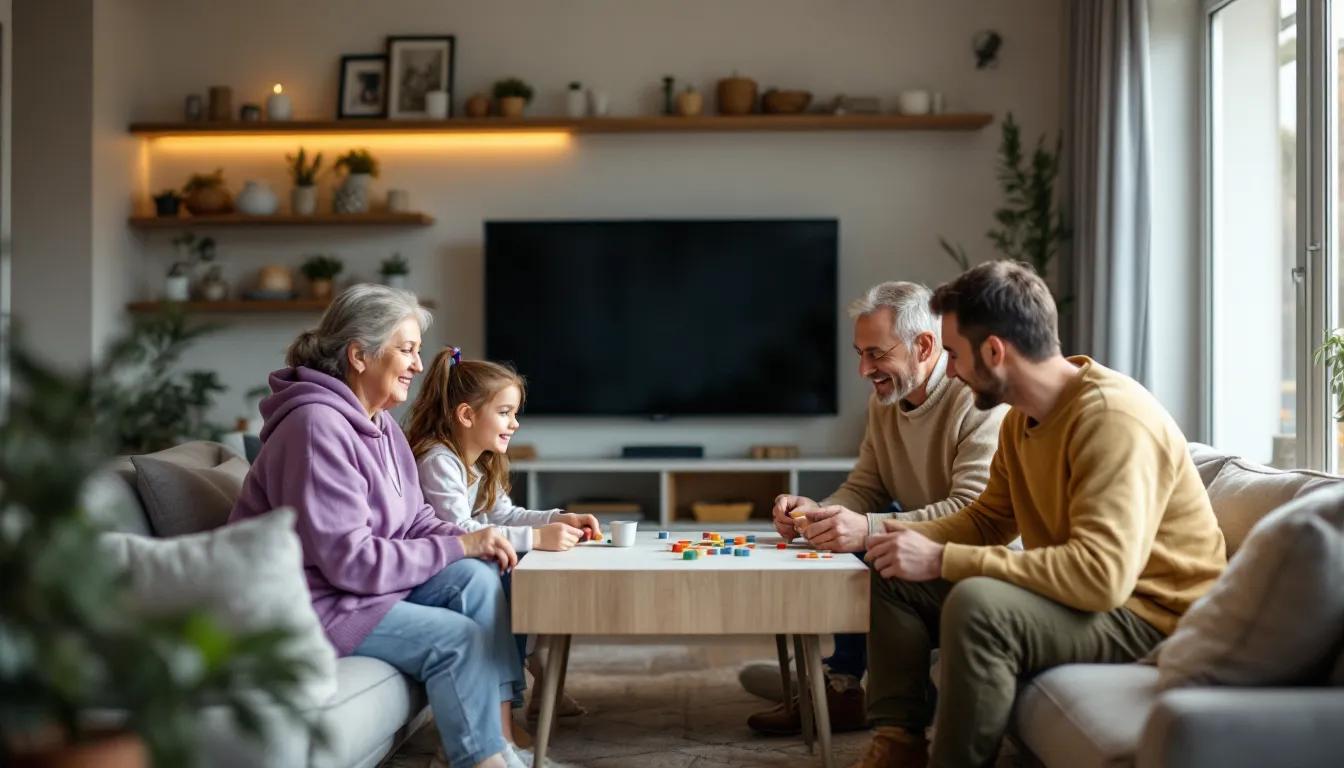

Puzzle games have always had a special place in gaming culture, but family puzzle games occupy an even more unique niche. They’re the rare genre that brings together grandparents, parents, and kids around the same screen, or sometimes multiple screens, working toward a common goal or engaging in friendly competition. Unlike competitive shooters or complex RPGs that require hundreds of hours to master, puzzle games offer accessible entry points while still delivering satisfying depth.
In 2026, the landscape of family puzzle games has evolved significantly. Cross-platform play is now standard rather than exceptional, accessibility features have become comprehensive, and developers have gotten much smarter about scaling difficulty to accommodate players of vastly different skill levels. Whether your family prefers huddling around a Switch during road trips, coordinating on PC for more complex challenges, or casually competing on mobile devices during dinner breaks, there’s never been a better time to jump into family puzzle gaming.
Key Takeaways
- Family puzzle games offer universally accessible entry points for all ages while still delivering satisfying depth and cognitive benefits like improved spatial reasoning and memory retention.
- The best family puzzle games feature flexible difficulty scaling, clear visual feedback, and design mechanics that allow mixed-skill groups to contribute meaningfully without anyone becoming a passive observer.
- Cooperative puzzle games like Portal 2 and It Takes Two strengthen family relationships and prosocial behavior better than competitive play, though healthy competition teaches valuable lessons about resilience and sportsmanship.
- Multiple platforms now support great family puzzle game experiences—from couch co-op on consoles to cross-platform online play and mobile titles—making it easy to find options suited to your family’s scheduling and setup needs.
- Game selection should focus on your family’s specific interests, skill levels, and gaming environment rather than chasing ‘objectively best’ titles; start with accessible options and pay attention to what generates genuine engagement.
Why Family Puzzle Games Are Perfect for All Ages
The beauty of puzzle games lies in their universal language. While a seven-year-old might struggle to grasp the loadout mechanics in a tactical shooter, that same kid can absolutely understand matching colored blocks or figuring out which piece fits where. This accessibility doesn’t mean puzzle games are simple, far from it. The best family puzzle games feature mechanics that are easy to learn but genuinely challenging to master.
Unlike story-driven games that require sustained attention across 40+ hour campaigns, puzzle games offer natural stopping points. Finished a level? Great, that’s a session. Want to tackle one more challenge? The game accommodates that too. This flexibility makes them perfect for families with varying schedules and attention spans.
Cognitive Benefits That Bring Families Together
Puzzle games aren’t just entertainment, they’re legitimate brain training wrapped in fun mechanics. Spatial reasoning, pattern recognition, and problem-solving skills all get exercised during gameplay. Studies have shown that regular puzzle game engagement can improve memory retention and processing speed across all age groups, from elementary school kids to seniors.
What makes family puzzle games particularly valuable is the multi-generational learning that happens organically. Younger players often have faster reflexes and more intuitive grasp of digital interfaces, while older family members bring strategic thinking and patience. When a 10-year-old helps grandma understand touch controls while grandma points out a pattern the kid missed, everyone’s learning from each other.
The cognitive benefits extend beyond the individual. When families solve puzzles together, they’re building shared mental models, developing a common vocabulary and approach to problems. This collaborative problem-solving translates surprisingly well to real-world family decision-making.
Building Communication and Teamwork Skills
Cooperative puzzle games force communication in ways that feel natural rather than forced. When you’re trying to coordinate moving platforms in Snipperclips or managing resource distribution in Overcooked (which, yes, has significant puzzle elements even though the cooking theme), you can’t succeed without talking to your teammates.
These aren’t the stilted “how was your day” conversations that happen at the dinner table. They’re dynamic exchanges focused on immediate problems: “I’ll handle the left side if you grab the blue blocks,” or “Wait, don’t rotate that yet, I need three more seconds.” This task-focused communication often opens doors to more personal conversations afterward.
Competitive puzzle games build different but equally valuable skills. Learning to win gracefully and lose without frustration are lessons every kid needs. When the competition is good-natured and the mechanics feel fair, competitive puzzle games teach resilience and sportsmanship in low-stakes environments.
What Makes a Great Family Puzzle Game
Not every puzzle game works for family play. Some are too mechanically demanding, others too simplistic to hold everyone’s interest, and many fail to account for the reality that your family probably includes people with vastly different gaming experience.
The standout family puzzle games share several key characteristics. They offer clear visual feedback so players immediately understand the results of their actions. They include flexible difficulty options that don’t feel patronizing. And critically, they’re designed so that a mixed-skill group can contribute meaningfully, nobody gets stuck being the passenger.
Accessibility and Difficulty Scaling
Accessibility in 2026 means more than just colorblind modes (though those are important). The best family puzzle games feature adjustable time limits, optional hints that don’t feel like cheating, and multiple solution paths to the same problem. Games like Portal 2’s co-op mode demonstrate this perfectly, experienced players can execute complex timing-based solutions while newer players can take methodical approaches that achieve the same result.
Difficulty scaling has gotten sophisticated. Modern family puzzle games often use adaptive difficulty systems that monitor performance and subtly adjust challenge level. If players are blazing through levels, the game quietly increases complexity. Struggling repeatedly? The game might reduce the number of elements or extend time limits without making a big announcement about it.
The key is that difficulty adjustments should feel natural, not condescending. Nobody wants to see “EASY MODE ACTIVATED” flash across the screen while playing with family. The best implementations are invisible, players just notice the game feels appropriately challenging.
Engagement for Mixed Age Groups
Keeping a six-year-old and a 40-year-old equally engaged is genuinely difficult. The solution isn’t dumbing down content, it’s layering complexity so that surface-level play is accessible while deeper strategies reward mastery.
Take match-3 games. A young kid can understand “match three of the same color,” while an experienced player is thinking five moves ahead, setting up cascades and recognizing optimal patterns. Both players are engaged with the same core mechanic at different depths.
The best family puzzle games also vary their challenge types. One level might emphasize spatial reasoning, the next timing and reflexes, then pattern recognition. This variety means that different family members get moments to shine based on their natural strengths. The kid who struggles with strategic planning might excel at the reflex-based challenges.
Best Family Puzzle Games Across All Platforms
Platform choice significantly impacts the family gaming experience. PC offers precision controls and often the most complex puzzles, consoles provide comfortable couch co-op, and mobile delivers accessibility and convenience. The good news? Great family puzzle games exist on every platform.
Top PC Puzzle Games for Family Play
Portal 2 (Steam, also on console) remains the gold standard for cooperative puzzle gaming. The co-op campaign features 60+ chambers that require genuine teamwork, and the difficulty curve is nearly perfect. It’s rated E10+, making it accessible for families with older kids. The humor lands across age groups, and the puzzle mechanics, portals, lasers, faith plates, gels, layer complexity beautifully.
Human: Fall Flat (Steam, PC, cross-platform) delivers physics-based puzzle platforming that’s equally hilarious and challenging. Up to eight players can tackle levels together in local or online co-op. The intentionally awkward controls create comedy gold while still requiring coordination to solve environmental puzzles. Available on PC, PS4, PS5, Xbox One, Xbox Series X
|
S, Switch, and mobile.
Moving Out (Steam, PC, and consoles) combines physics puzzles with time management. Players work together as furniture movers, navigating increasingly absurd scenarios. It’s Overcooked without the cooking stress, and the adjustable assist mode makes it genuinely playable for very young kids or less experienced gamers.
Escape Academy (Steam, PC, Xbox, PlayStation) brings escape room challenges to your screen with both solo and co-op modes. The difficulty ranges from straightforward to genuinely brain-melting, and the progression system keeps families coming back. Released in 2022 with DLC continuing through 2025, it’s been refined based on extensive player feedback.
Console Puzzle Games the Whole Family Will Love
It Takes Two (PS4, PS5, Xbox One, Xbox Series X
|
S, PC via Origin/Steam) won Game of the Year in 2021 and remains exceptional for family play. Designed exclusively for two-player co-op, it constantly introduces new mechanics and puzzle types. The narrative occasionally tackles mature themes, so it’s best suited for families with teens, but the gameplay variety is unmatched.
Snipperclips (Nintendo Switch) is the rare puzzle game designed specifically for couch co-op. Players control paper characters who can cut each other into different shapes to solve environmental puzzles. It’s charming, creative, and accessible for ages 6+. The competitive modes provide a nice change of pace from cooperative challenges.
Captain Toad: Treasure Tracker (Switch, 3DS, Wii U) delivers isometric puzzle-platforming that’s perfect for younger families. Players rotate compact diorama-like levels to find solutions. Two-player co-op on Switch allows a second player to assist by throwing turnips, making it ideal for parent-child pairs where skill levels differ significantly.
Lovers in a Dangerous Spacetime (Switch, Xbox One, PS4, PC) requires 2-4 players to control different stations on a spaceship while navigating through hostile environments. The frantic coordination needed creates memorable moments, and the difficulty scales smoothly from casual to genuinely challenging.
Mobile Puzzle Games for On-the-Go Family Fun
Mobile puzzle games have matured significantly, with many now offering legitimate depth rather than just microtransaction-heavy time-wasters. Comprehensive mobile gaming guides often highlight the best family-friendly options updated for current app store versions.
Monument Valley 1 & 2 (iOS, Android) are gorgeous isometric puzzle games featuring impossible geometry. The calm pacing and stunning art design appeal to all ages, and the levels are short enough for playing in waiting rooms or during commutes. No ads, no timers, no pressure, just pure puzzle-solving.
The Room series (iOS, Android) delivers tactile puzzle-box challenges optimized for touch controls. The atmospheric presentation and clever mechanical puzzles engage older kids and adults effectively. Four games in the series provide dozens of hours of content, and the most recent entry, The Room: Old Sins, was updated in early 2025 with enhanced graphics for newer devices.
Mekorama (iOS, Android) is a charming diorama-based puzzle game where players guide a tiny robot through mechanical levels. It’s free with optional donations to the developer, includes a level editor, and the difficulty range accommodates everyone from elementary school kids to puzzle veterans.
Ticket to Earth (iOS, Android, Switch, PC) blends match-3 mechanics with tactical RPG elements. The story campaign provides context that keeps players invested, and the core puzzle mechanics are satisfying without requiring constant internet connectivity or dealing with energy systems.
Cooperative vs. Competitive Family Puzzle Games
The cooperative versus competitive debate isn’t about which is better, it’s about understanding when each mode serves your family best. Some families thrive on friendly competition, others prefer working toward shared goals, and most benefit from a healthy mix of both.
When Cooperation Creates the Best Memories
Cooperative puzzle games shine when you’re trying to include family members with significant skill gaps. A parent-child pair in Portal 2 co-op creates natural mentoring opportunities. The more experienced player can guide without taking over, and the learning player contributes meaningfully rather than being carried.
Co-op modes also tend to reduce the frustration that can derail family gaming sessions. When everyone wins or loses together, there’s less finger-pointing and more collective problem-solving. Games like Unravel Two or ibb & obb require such tight coordination that success feels genuinely earned.
The social bonding research is clear: cooperative play increases prosocial behavior and strengthens relationships more effectively than competitive play. When families work together to solve progressively harder puzzles, they’re building shared achievement narratives, “remember when we finally figured out that impossible level?”, that reinforce family identity.
Asynchronous cooperation works well too. Games like Death Squared allow players to work on separate but interdependent tasks. One player might control platforms while another navigates hazards, creating cooperation without requiring identical skill sets.
Healthy Competition That Brings Out Everyone’s Best
Competitive puzzle games serve different purposes. They can help energetic kids burn mental energy in productive ways, teach important lessons about winning and losing, and reveal different facets of family members’ personalities.
Tetris Effect: Connected (available on PC, Xbox, PlayStation, Quest) features competitive modes alongside its celebrated cooperative Zone Battle mode. The competitive head-to-head creates intense moments, but matches are quick enough that losing doesn’t sting for long.
Puyo Puyo Tetris 2 (Switch, PS4, PS5, Xbox One, Xbox Series X
|
S, PC) combines two classic puzzle franchises with extensive competitive and cooperative modes. The skill ceiling is astronomical for serious players, but the handicap system allows mixed-skill family matches that stay competitive.
The key to successful competitive family puzzle gaming is transparency in mechanics. Games where victory feels arbitrary or dependent on RNG rather than skill create frustration. The best competitive puzzle games make it clear why someone won, they saw the pattern faster, planned further ahead, or executed more efficiently.
Competition also provides natural difficulty scaling. Playing against family members who push you creates growth opportunities that static AI opponents can’t match. Younger players learn by competing against older siblings, and everyone’s skills improve together.
Classic Puzzle Game Genres Perfect for Families
Certain puzzle game genres have proven track records for family engagement. Understanding these categories helps when browsing digital storefronts or looking for your next family gaming session.
Match-3 and Tile-Matching Games
Match-3 mechanics are immediately intuitive: match three or more identical items to clear them. This simplicity makes them perfect entry points for non-gamers, while the strategic depth keeps experienced players engaged.
Bejeweled 3 and its descendants offer pure matching without the aggressive monetization that plagues many mobile match-3 games. The various modes, timed, puzzle, zen, accommodate different family preferences.
Puzzle Quest 3 (mobile, PC) adds RPG progression to match-3 combat, creating a hybrid that appeals to both puzzle fans and RPG enthusiasts. The competitive multiplayer modes pit players’ puzzle-solving speed against each other.
Traditional tile-matching extends beyond match-3 into games like Mahjong variants and Bejeweled Blitz. These games work particularly well for intergenerational play because the mechanics haven’t changed significantly in decades, grandparents who played physical Mahjong can jump into digital versions without relearning everything.
Physics-Based and Logic Puzzles
Physics puzzles require players to understand and manipulate in-game physics systems. Angry Birds pioneered mainstream physics puzzle gaming, but the genre has evolved significantly.
World of Goo (available on nearly every platform since its 2008 release, with the remastered version updated in 2024) remains exceptional. Players construct bridges and structures using goo balls, with solutions ranging from barely functional to elegantly engineered. The difficulty progression accommodates families, and the art style has timeless appeal.
Baba Is You flips logic puzzles on their head by making the rules themselves manipulable objects. It’s genuinely mind-bending, rewarding creative thinking over rote pattern recognition. Appropriate for families with older kids who enjoy metapuzzles and abstract thinking.
The Witness (PS4, Xbox One, PC, iOS) is a first-person puzzle game set on a mysterious island. While largely a solo experience, families can tackle it together, with different members contributing observations that crack seemingly impossible puzzles. The non-linear structure means stuck players can move to different areas and return later.
Many resources offering detailed game walkthroughs have extensively documented these physics and logic puzzle titles, helping families who get stuck without completely spoiling the satisfaction of solving puzzles.
Word Games and Trivia Challenges
Word games create natural knowledge-sharing opportunities. Vocabulary-savvy parents can help younger kids while learning gaming mechanics from them in return.
Wordle (now owned by NYT, playable via web browsers and mobile apps) became a cultural phenomenon for good reason. One puzzle per day, no timers, sharable results without spoilers, it’s perfectly designed for family play. Households often gather to solve it together each morning.
Scrabble GO (iOS, Android) digitizes the classic board game with quality-of-life improvements like automatic scoring and a dictionary built in. The various modes accommodate solo practice, family matches, and ranked competitive play.
Wheel of Fortune and Jeopardy. have official games across multiple platforms. These translate TV game show formats into interactive experiences, and the familiar format makes them accessible for grandparents who might not consider themselves gamers.
Wordscapes (iOS, Android) blends word search with crossword puzzles in a relaxing package. The difficulty increases gradually, and there’s no energy system or aggressive monetization in the premium version. Background music is genuinely calming rather than annoying.
How to Choose the Right Puzzle Game for Your Family
With thousands of puzzle games available across platforms, narrowing down options to find the perfect fit requires understanding your specific family dynamics and gaming setup.
Assessing Your Family’s Skill Levels and Interests
Start by honestly evaluating everyone’s gaming experience. Has anyone played puzzle games before? Are family members generally comfortable with controllers, or would touch controls work better?
Create a quick inventory of interests beyond gaming. Families who enjoy escape rooms will gravitate toward games like Escape Academy or The Room series. Families who like building things together might prefer physics construction games like World of Goo or Bridge Constructor Portal.
Age range matters enormously. Games appropriate for families with teenagers (like It Takes Two with its relationship themes) won’t work for families with elementary school kids. Conversely, games designed for younger children can feel patronizing to teens.
Consider frustration tolerance. Some families handle challenge well, enjoying the satisfaction of finally cracking a tough puzzle. Others prefer relaxed, low-pressure experiences. There’s no right answer, games exist for both preferences.
Test genre variety. Don’t assume that because someone enjoyed one match-3 game, they’ll love all match-3 games. The presentation, pacing, and reward structures vary significantly even within genres. Many puzzle games offer free demos or trial periods, use them.
Platform Considerations and Setup Requirements
Platform choice isn’t just about what hardware you own. It’s about where and how your family games together.
Local co-op requires everyone in the same room with controllers. This works great for scheduled family game nights but isn’t practical for families whose members have different schedules. Games like Overcooked, Moving Out, and Lovers in a Dangerous Spacetime shine in this setup.
Online co-op allows family members to play together from different locations. College students can game with parents, or siblings in different cities can maintain connections. Portal 2, It Takes Two, and Human: Fall Flat all support online play.
Cross-platform support has become increasingly common. If one family member games on Xbox while another prefers Switch, cross-platform titles like Human: Fall Flat or It Takes Two bridge that gap.
Consider screen sharing for single-player puzzle games. Even solo experiences like The Witness or Baba Is You can become collaborative when family members watch and contribute ideas. Discord screen sharing or console streaming features make this easy.
Controller requirements vary. Some puzzle games support keyboard and mouse alongside controllers, while others require specific input methods. Make sure you have enough controllers before committing to local multiplayer games.
Storage and download speeds matter more than you’d think. Some puzzle games have surprisingly large file sizes. If your family games on mobile with limited data plans, factor in download sizes and whether games require constant internet connectivity.
Tips for Making Family Puzzle Gaming Sessions Successful
Owning great puzzle games doesn’t guarantee great family gaming experiences. The setup, environment, and approach to sessions matter as much as game choice.
Creating a Positive and Inclusive Gaming Environment
Set clear expectations before starting. Will this be cooperative or competitive? Are you trying to beat specific levels or just playing casually? How long is the session?
Rotate control when possible. In games that support controller swapping, make sure everyone gets equal time actually playing rather than watching. Some families set timers, others switch after each death or completed level.
Celebrate different types of contributions. The person who figured out the puzzle solution contributed just as much as the person who executed it. Acknowledge strategic thinking, pattern recognition, and mechanical execution equally.
Establish pause protocols. Family gaming should never feel like an obligation. If someone’s frustrated, taking a break should be normalized, not treated as quitting. Many families use the “three failed attempts then switch games” rule.
Accommodate different communication styles. Some people think out loud while solving puzzles, others need quiet concentration. Find games and session structures that work for your family’s dynamic. Games with separate but interdependent challenges (like Death Squared) work well for quieter players.
Avoid backseat gaming unless explicitly welcomed. Unsolicited advice, even when well-intentioned, often frustrates the person playing. Many families carry out a “no hints unless requested” policy.
Resources offering comprehensive how-to articles for popular games can help families learn mechanics together without one person having to research everything beforehand, creating more balanced starting points.
Balancing Screen Time with Other Activities
Puzzle games, even though their cognitive benefits, still count as screen time. Integration rather than isolation is key.
Use puzzle games as scheduled activities rather than default time-fillers. “Friday night is puzzle game night” creates anticipation and structure. The defined boundaries make screen time feel special rather than endless.
Connect digital puzzle gaming to analog activities. After enjoying Captain Toad, try physical logic puzzles. After mastering Baba Is You, explore other rule-manipulation board games. The digital and physical puzzle worlds complement each other beautifully.
Set realistic session lengths. Puzzle games’ level-based structure makes natural stopping points easy to find. Most families find 45-60 minute sessions hit the sweet spot, long enough to make progress but short enough to maintain engagement without fatigue.
Track cognitive patterns. Some families notice that puzzle gaming works better at specific times. Morning sessions might suit logic-heavy games, while evening sessions work better for relaxed match-3 games. Experiment to find what works.
Consider puzzle games as transitions between other activities. A quick mobile puzzle game during the commute home helps kids decompress before assignments. A cooperative console puzzle session between dinner and bedtime creates bonding time without dominating the evening.
The Future of Family Puzzle Gaming in 2026 and Beyond
The puzzle game landscape continues evolving rapidly, with several trends shaping what family gaming will look like in the coming years.
AI-driven adaptive difficulty has matured beyond clumsy rubber-banding. Modern implementations analyze not just success rates but problem-solving approaches, adjusting challenge in ways that feel organic. Games now recognize when players are stuck due to overlooking a mechanic versus genuinely needing reduced complexity.
VR and AR puzzle experiences have finally reached accessibility thresholds for families. The Quest 3 and competing headsets have dropped to price points comparable to consoles, and family-friendly VR puzzle games like Cubism and Moss demonstrate the medium’s potential. AR puzzle games using phone cameras continue gaining sophistication, with real-world object interaction creating entirely new puzzle types.
Cross-generational design has become an explicit development goal rather than happy accident. Studios now conduct playtesting with actual mixed-age families rather than assuming adult testers can simulate kid perspectives. This research shows in games’ tutorialization, difficulty curves, and cooperative mechanics.
Streaming and asynchronous play features are expanding. Some puzzle games now allow family members to leave hints for each other without spoiling solutions, ghost recordings showing approaches without revealing answers, or drawing tools that let someone circle important areas.
Educational integration without edutainment stigma represents another frontier. Puzzle games are being designed with educational frameworks built into core mechanics in ways that don’t sacrifice fun. Math, physics, language, and logic principles get taught through genuinely engaging puzzle design.
The subscription model impact continues growing. Game Pass, PlayStation Plus, and Nintendo Switch Online provide puzzle game libraries that lower the barrier to trying new titles. Families can experiment with genres and styles without committing to full-price purchases.
User-generated content has become more accessible. Games with robust level editors and sharing features, like Super Mario Maker 2 for platforming puzzles or Portal 2’s community test chambers, provide nearly infinite content. Families create levels for each other, building meta-games around their creations.
The line between puzzle games and other genres continues blurring productively. Puzzle elements appear in almost every genre now, while puzzle games incorporate progression systems, narratives, and mechanical variety from other genres. This hybridization creates entry points for families who might not initially identify as puzzle game fans.
Conclusion
Family puzzle games occupy a special category in gaming, accessible enough for newcomers, deep enough for veterans, and structured in ways that create genuine bonding opportunities rather than just parallel screen time. The genre has matured tremendously, with developers understanding that families need flexible difficulty, varied cooperative and competitive modes, and mechanics that value different types of contributions.
The platform diversity in 2026 means families can find puzzle gaming experiences suited to their specific situations. Couch co-op for traditional game nights, cross-platform online play for distributed families, and mobile options for shorter sessions all serve different needs effectively.
What matters most isn’t finding the objectively “best” puzzle game, it’s identifying which games match your family’s dynamics, interests, and skill levels. Start with accessible titles, pay attention to what generates genuine engagement versus polite tolerance, and don’t hesitate to switch games when something isn’t working. The goal is shared experiences and cognitive growth wrapped in fun, not completing every puzzle game in existence.
The cognitive benefits are real, the relationship strengthening is measurable, and the memories created during puzzle gaming sessions last far beyond the final level completed. Whether your family is just starting its puzzle gaming journey or looking to expand beyond familiar genres, there’s never been a better time to explore what the category offers.