
Northern Essex Community College’s esports program has quietly built a reputation as one of the most competitive and well-structured collegiate gaming programs in the Northeast. While powerhouse universities often dominate headlines, NECC Esports has carved out a space where community college students can compete at a level that rivals four-year institutions, and they’ve got the tournament results to prove it.
Whether you’re a prospective player eyeing tryouts, a current student wondering what the program offers, or just curious about how a Massachusetts community college became a regional contender, this guide breaks down everything you need to know about NECC Esports in 2026. From their competitive rosters and facility upgrades to scholarship opportunities and alumni success stories, here’s the full picture.
Key Takeaways
- NECC Esports has grown from a single League of Legends team in 2018 to a multi-game competitive program with state-of-the-art facilities, earning 12 top-three regional finishes and three conference championships.
- The program fields competitive rosters in League of Legends, Valorant, Rocket League, and fighting games, with consistent top-eight regional placements despite operating as a community college with fewer resources than four-year universities.
- Prospective players must be enrolled NECC students with at least 6 credit hours per semester and a 2.0 GPA, with tryouts held at the start of each semester focusing on communication, coachability, and team fit alongside mechanical skill.
- NECC Esports scholarships range from $500 to $2,500 annually and are supplemented by tournament prize pools, hardware discounts, travel stipends, and access to free equipment and coaching.
- Notable alumni like Marcus ‘Clutch’ Rivera have leveraged their NECC experience to secure scholarships at Division I programs and sign with Tier 2 amateur organizations, demonstrating the program’s effectiveness as a pipeline for player development.
- Upcoming expansion plans include adding Counter-Strike 2 and Apex Legends rosters, opening a second practice facility on the Lawrence campus, and hosting a regional LAN invitational in Fall 2026 to position NECC as a hub for collegiate esports in New England.
What Is NECC Esports?
NECC Esports is the competitive gaming program at Northern Essex Community College, based in Haverhill and Lawrence, Massachusetts. Launched as part of the college’s broader push to engage students through emerging competitive platforms, the program fields teams across multiple titles including League of Legends, Valorant, Rocket League, and various fighting games.
Unlike casual gaming clubs, NECC Esports operates as a structured varsity-level program. Players practice on set schedules, compete in regional and national tournaments through organizations like the National Association of Collegiate Esports (NACE) and Electronic Gaming Federation (EGF), and represent the college in inter-collegiate competition.
The program is open to all enrolled NECC students, regardless of major or gaming experience level. Tryouts are held at the start of each semester, and rosters are built through a combination of skill assessment and team synergy evaluation. It’s not just about individual mechanics, coaches look for players who communicate well and adapt to team-focused strategies.
NECC competes primarily within the New England Collegiate Conference (also abbreviated NECC, which can get confusing) and other regional circuits. The program has grown from a handful of League players in 2018 to a multi-game operation with dedicated coaching staff, a physical gaming arena on campus, and partnerships with hardware sponsors.
The History and Evolution of NECC Esports
From Humble Beginnings to Regional Powerhouse
NECC Esports started in Fall 2018 with a single League of Legends team and about a dozen interested students. The program operated out of a repurposed computer lab with mismatched peripherals and consumer-grade monitors. Initial funding came from student activities budgets and a small grant from the Massachusetts Department of Higher Education’s innovation fund.
The first season was a learning experience. The team went 3-7 in their inaugural split, competing against more established programs with better infrastructure. But the interest was there, students showed up to practices, local high schoolers started asking about the program during campus tours, and the administration began to see esports as a legitimate recruitment and retention tool.
By 2020, NECC had expanded to include Overwatch (later transitioned to Overwatch 2, then eventually Valorant as the competitive scene shifted) and Rocket League teams. The college secured a partnership with a local gaming cafe to host scrimmages and viewing parties, building community around the program even during the pandemic when on-campus activities were limited.
The real turning point came in 2022 when NECC opened a dedicated esports arena as part of a campus technology center renovation. This wasn’t just a few gaming PCs in a corner, it was a purpose-built space with tournament-grade equipment, soundproofing, broadcast capabilities, and spectator seating. The investment signaled that NECC was serious about competing, not just participating.
Key Milestones and Championship Victories
NECC’s competitive breakthrough came in Spring 2023 when their League of Legends team qualified for the NACE Eastern Conference playoffs, finishing 4th out of 32 teams. It was the first time a Massachusetts community college had cracked the top five in that bracket.
The Fall 2023 season saw even bigger wins. NECC’s Rocket League squad took first place in the New England Regional Championship, defeating teams from UMass Lowell and Wentworth Institute of Technology in a best-of-seven grand finals that went the distance. The victory earned the team a $5,000 scholarship pool and an automatic bid to the NACE National Championship in Harrisburg, PA.
In 2024, NECC added a competitive Valorant roster just as the game’s collegiate scene was exploding. Within two seasons, they’d become one of the most consistent teams in the region, regularly placing in top-eight finishes at regional events covered by outlets like Dot Esports.
The program’s most decorated player, Marcus “Clutch” Rivera, led the League team to back-to-back conference semifinals in 2024 and 2025 before graduating and signing with a Tier 2 amateur org. His success put NECC on the map as a legitimate pipeline for player development.
As of Spring 2026, NECC has accumulated 12 top-three regional finishes across all games, three conference championships, and one national top-16 placement. Not bad for a program that’s less than eight years old.
NECC Esports Teams and Competitive Games
League of Legends Program
League remains NECC’s flagship program and most competitive roster. The team competes in the NACE Starleague Division, typically fielding a starting five with two to three substitutes. Practice schedule runs Monday through Thursday, 6-9 PM, with VOD review sessions on Fridays.
The current roster (as of Spring 2026 split) runs a flexible draft strategy, comfortable playing both standard meta comps and off-meta counterpicks. Their mid-laner, Elijah “Vortex” Santos, has a champion pool that includes Azir, Sylas, and Orianna, making him one of the most versatile players in the conference. The team’s macro play, particularly their mid-to-late game objective control, is a known strength.
NECC’s LoL squad scrims regularly against other regional programs and occasionally picks up practice matches against Academy-level teams through coaching connections. Results from the official League esports ecosystem show NECC consistently ranked in the top 25% of NACE’s Eastern Conference, a solid position for a two-year college program.
Coach Brian Nguyen, a former Diamond-tier player who competed semi-professionally in Season 8 and 9, emphasizes fundamentals: wave management, vision control, and communication discipline. His coaching philosophy focuses on building players who understand why they’re making decisions, not just executing mechanics.
Valorant Division
NECC’s Valorant team is the newest but fastest-growing program. Competing in the Collegiate Valorant League (CVL) and select NACE tournaments, the team has climbed from unranked to a consistent top-16 regional finish in just four competitive seasons.
The roster runs a five-man starting lineup with two alternates. Their playstyle leans aggressive, lots of early map control, utility-heavy executes, and confidence taking aim duels. Their main duelist, Alyssa “Phantom” Lee, consistently tops the server in first bloods and has a 1.23 K/D across the 2025-2026 season.
Map pool favorites include Haven (where they have a 72% win rate) and Bind, though they’ve struggled historically on Fracture and tend to ban it when possible. The team practices agent flexibility, with most players comfortable on at least three agents across two roles.
Notable performances include a 2-1 upset victory over Northeastern University in the Winter 2026 New England Invitational, a match that was featured in tournament recaps on major gaming outlets. The team’s coordinator, Jessica Tran, focuses heavily on mental coaching and tilt management, critical in a game where momentum swings as fast as Valorant.
Rocket League and Fighting Game Rosters
NECC’s Rocket League team competes in 3v3 standard format through the Collegiate Rocket League (CRL) circuit. The squad qualified for the Spring 2026 CRL Regional Championship, where they placed 5th out of 24 teams, a program-best result. Their rotation is built around speed and boost management, with a preference for aggressive aerial play and demo-heavy offensive pressure.
The current roster includes:
- Tyler “Boost” Morrison (striker/offensive specialist)
- David “Wall” Chen (defensive anchor)
- Sophia “Flash” Rodriguez (flex/rotation player)
Practice runs Tuesday and Thursday evenings, with ranked grind sessions encouraged but not mandatory. The team’s peak MMR sits around Champion II to Champion III, placing them in the upper echelon of collegiate competition.
The Fighting Game Community (FGC) roster is less formalized but no less competitive. NECC fields players in Street Fighter 6, Tekken 8, and Super Smash Bros. Ultimate. Competitions are primarily local and regional monthlies, though select players have qualified for major open brackets at events like Combo Breaker and CEO.
Kevin “KO” Patel, a Tekken 8 King main, placed 9th at the Northeast Regional Championship in January 2026 and is currently ranked in the top 200 on the East Coast leaderboard. The FGC program operates more like a club-within-a-program, with flexible practice schedules and a focus on matchup knowledge and frame data study.
How to Join NECC Esports: Tryouts, Requirements, and Application Process
Eligibility Criteria for Prospective Players
To try out for NECC Esports, you must be an enrolled student at Northern Essex Community College taking at least 6 credit hours per semester (half-time status). Both full-time and part-time students are eligible, making the program accessible even if you’re balancing work or other commitments.
There’s no age restriction beyond standard college enrollment requirements, and the program welcomes students from all majors. You don’t need prior competitive experience, walk-ons are common, especially for newer games like Valorant where the collegiate meta is still developing.
Academic standing matters. Players must maintain a minimum 2.0 GPA to remain on rosters, and coaches check grades at midterms and finals. If you dip below that threshold, you’re placed on academic probation and may be suspended from competition until grades improve. The policy isn’t about gatekeeping, it’s about ensuring esports supports your education rather than distracting from it.
International students on F-1 visas are eligible to compete. Since collegiate esports scholarships are typically awarded as institutional aid (not athletic scholarships), there are no NCAA-style restrictions. But, if you’re on a student visa, confirm your enrollment status meets the program’s credit-hour minimums.
Tryout Schedule and Selection Process
Tryouts are held during the first two weeks of each semester, typically late August for Fall and late January for Spring. The exact schedule is posted on the NECC Esports Discord server and the college’s student activities page about three weeks before the semester starts.
The process varies slightly by game but generally follows this structure:
1. Open Interest Meeting (Week 1)
Coaches introduce the program, outline expectations, and explain the tryout format. Attendance isn’t mandatory, but it’s highly recommended. You’ll also fill out a tryout form with your in-game name, rank, preferred roles, and availability.
2. Individual Skill Assessment (Week 1-2)
For games like League and Valorant, you’ll play a set of observed ranked or custom matches while coaches evaluate mechanics, game sense, and communication. Rocket League tryouts include 1v1 and 3v3 scrimmages to assess positioning and rotation IQ.
3. Team Scrimmages (Week 2)
Prospects are mixed into trial rosters and play scrimmages against current team members or other tryout groups. Coaches watch for synergy, adaptability, and attitude under pressure. Can you take feedback mid-match? Do you tilt when things go wrong? These intangibles matter as much as KDA.
4. Roster Announcements (End of Week 2)
Final rosters are posted on Discord and emailed to tryout participants. If you make the team, you’ll sign a participation agreement outlining practice commitments, conduct expectations, and academic requirements. If you don’t make the starting roster, you may be offered a substitute or development squad position.
Walk-In Tryouts:
If you miss the official tryout window, you can still reach out to coaches via email ([[email protected]]) or Discord. Mid-season roster additions happen occasionally due to player graduation, schedule conflicts, or performance issues. It’s harder to break in mid-season, but it’s not impossible, especially if you’re filling a role gap.
What Coaches Look For:
- Communication: Clear, non-toxic comms are non-negotiable
- Coachability: Can you apply feedback quickly?
- Consistency: Flashy plays are cool, but reliable performance wins matches
- Team fit: Do you mesh with the roster’s playstyle and culture?
Rank isn’t everything. A Gold player with great attitude and game sense can beat out a Diamond player who tilts or refuses to adapt.
NECC Esports Facilities and Training Infrastructure
State-of-the-Art Gaming Arena and Equipment
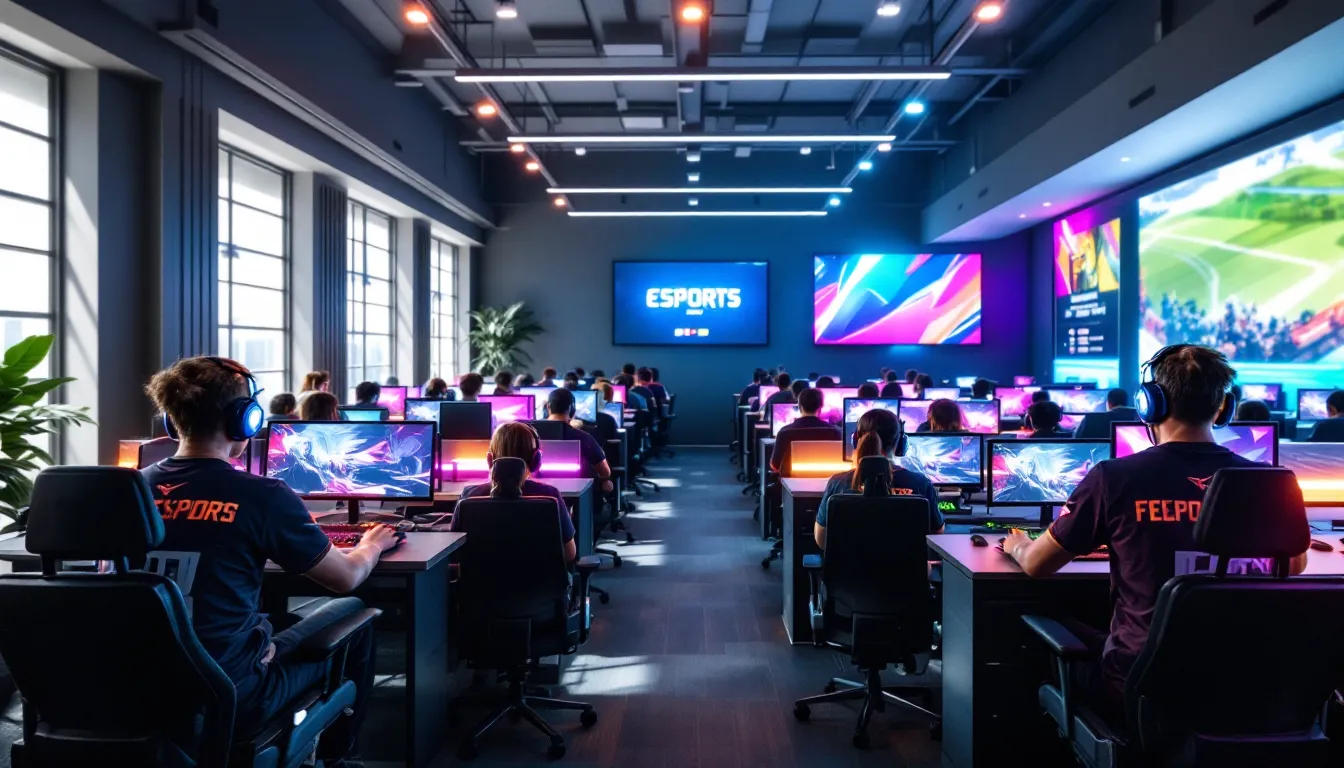
NECC’s esports arena is located in the Dimitry Building Technology Center on the Haverhill campus. The 2,400-square-foot space opened in Fall 2022 and seats up to 50 spectators during live events, with an additional broadcast booth for streaming matches and hosting viewing parties.
The facility includes:
- 20 gaming stations with custom-built PCs (specs as of 2026: AMD Ryzen 7 7800X3D, NVIDIA RTX 4070 Ti, 32GB DDR5 RAM)
- 240Hz 1ms IPS monitors (ASUS ROG Swift series)
- Peripherals from Logitech G (mice, keyboards, headsets), part of an ongoing sponsorship deal
- Herman Miller Vantum gaming chairs for ergonomic support during long practice sessions
- Gigabit fiber internet with dedicated esports VLAN to eliminate lag and ensure stable ping
All equipment is standardized, so players practice on the same setup they’ll use in competition. No more “my mouse feels different” excuses on match day.
The arena also features a full production setup: multi-camera rig, stream deck, OBS Studio workstations, and a soundboard for live event commentary. NECC streams select home matches on Twitch and hosts LAN events for regional colleges, generating both community engagement and modest sponsorship revenue.
Students don’t need to bring their own gear, everything’s provided. But if you prefer your own mouse or headset, you’re welcome to use it. Just don’t expect tech support if your RGB software conflicts with the arena’s network.
Coaching Staff and Player Development Programs
NECC employs two full-time esports coordinators and several part-time game-specific coaches, most of whom are former competitive players or hold coaching certifications from organizations like Gamer Sensei or Mobalytics.
Brian Nguyen leads the League of Legends program. He played semi-pro during Seasons 8-10, peaking at Master tier, and has coached at the collegiate level since 2021. His approach blends VOD review, 1-on-1 mentorship, and structured practice blocks focusing on specific win conditions (early game aggression, vision control, team fighting, etc.).
Jessica Tran oversees Valorant and general program operations. A former collegiate player herself (Boston University, 2019-2021), she emphasizes mental coaching: managing tilt, building confidence, and maintaining focus during high-pressure rounds. She’s also the primary contact for tryouts and roster management.
Player development extends beyond mechanics. NECC offers:
- Weekly VOD review sessions: Teams break down recent matches, identifying mistakes and opportunities
- Guest workshops: Past sessions have included talks from sports psychologists, content creators, and pro players
- Scrims with external teams: Coordinated through regional networks, giving players exposure to different playstyles
- Individual coaching: One-on-one sessions to work on specific skills (e.g., ADC positioning, Rocket League aerials, Tekken punishment)
The program also partners with platforms like Mobalytics and Tracker Network to analyze player stats and identify improvement areas. It’s data-driven development, not just grind-and-hope practice.
For players interested in content creation or broadcasting, NECC offers access to the arena’s production tools and occasional workshops on streaming, video editing, and social media strategy. Several alumni have launched successful YouTube or Twitch channels using skills developed at NECC.
Notable NECC Esports Players and Alumni Success Stories
Marcus “Clutch” Rivera is NECC’s most successful alumnus to date. A mid-laner for the League team from 2022-2025, Marcus led the roster to back-to-back conference semifinals and earned All-Conference honors twice. After graduating with an associate degree in computer science, he signed with Maryville Esports (a Division I powerhouse) on scholarship to complete his bachelor’s while competing at a higher level. He’s currently playing for a Tier 2 amateur organization with aspirations to break into Challengers.
Marcus credits NECC with teaching him not just mechanics but professionalism, showing up on time, communicating with teammates, handling losses maturely. Those soft skills matter when you’re trying to stand out in a crowded competitive scene.
Alyssa “Phantom” Lee joined NECC’s Valorant team as a walk-on in Fall 2024 with zero competitive experience. She’d played ranked casually but had never scrimmed or competed in a structured environment. Two seasons later, she’s the team’s leading fragger and one of the most feared duelists in the regional circuit. Her story shows that raw talent plus coaching can accelerate development fast, especially in newer esports where the skill gap between casual and semi-pro is narrower.
Alyssa is on track to transfer to a four-year university with continued esports eligibility, and several programs have already reached out based on her performance at NECC.
Tyler “Boost” Morrison, Rocket League striker, parlayed his NECC experience into a coaching position at a local esports academy. He graduated in Spring 2025 and now coaches high school and middle school players while streaming Rocket League content on Twitch. His channel has about 3,000 followers, not huge, but enough to generate supplemental income.
Other alumni have taken different paths. Kevin Patel (Tekken player) used his FGC connections to land a community management role at a fighting game tournament organizer. Sarah Kim (former Overwatch player, now Valorant coach-in-training) is pursuing a degree in sports management with an eye toward esports team operations.
NECC doesn’t claim to be a factory churning out pros, but it does provide a structured environment where motivated players can develop skills, build networks, and figure out whether competitive gaming is a hobby or a viable career path. For a community college program, that’s a pretty solid track record.
NECC Esports Tournament Results and Competitive Achievements
Conference Championships and Regional Tournaments
NECC competes primarily in the NACE Eastern Conference (League, Valorant, Rocket League) and various regional invitationals hosted by colleges and third-party organizers. Their most consistent success has come in regional play, where they regularly finish in the top five.
League of Legends:
- Spring 2023: NACE Eastern Conference Playoffs, 4th place (best program finish to date)
- Fall 2023: New England Collegiate Conference Finals, 2nd place
- Spring 2024: NACE Starleague Division, Conference Semifinals (Top 8)
- Fall 2025: Regional Invitational Championship, 1st place (defeated UMass Lowell in finals)
Valorant:
- Winter 2025: CVL Northeast Regional, Top 16
- Spring 2026: New England Invitational, Top 8 (upset win over Northeastern)
- Currently holding a 12-4 record in Spring 2026 CVL regular season
Rocket League:
- Fall 2023: New England Regional Championship, 1st place (program’s first regional title)
- Spring 2024: CRL East Regional Qualifier, 3rd place
- Spring 2026: CRL Regional Championship, 5th place
Fighting game results are harder to track since much of the competition happens at local and regional monthlies rather than structured leagues, but NECC players have earned top-16 placements at majors including Frosty Faustings (Tekken), Shine (Smash Ultimate), and various Northeast regional events covered in competitive gaming news outlets.
National Competition Performance
NECC’s national tournament experience is still developing, but they’ve made appearances at several high-profile events.
Their Rocket League squad qualified for the NACE National Championship in Harrisburg, PA in Spring 2024 after winning regionals. They went 1-2 in group play, finishing 13th out of 16 teams. Not a deep run, but valuable experience competing against programs with bigger budgets and more established pipelines.
The League team has yet to qualify for a national championship but came close in Spring 2024, falling one game short in the conference finals. With continued roster development and an increasingly competitive region, a national appearance feels achievable within the next year or two.
Valorant is the wildcard. The collegiate scene is still maturing, and NECC’s aggressive playstyle translates well to best-of-three formats. If they can tighten up map pool consistency, particularly on maps like Fracture and Breeze, they could surprise people at a national event.
Overall, NECC’s competitive achievements are impressive for a community college program operating with a fraction of the resources available to four-year universities. They’re not winning national titles (yet), but they’re consistently competitive at the regional level and occasionally punch above their weight.
Scholarships, Funding, and Financial Support for NECC Esports Athletes
NECC offers esports scholarships ranging from $500 to $2,500 per academic year, awarded based on a combination of competitive skill, academic standing, and demonstrated commitment to the program. Scholarships are funded through a mix of institutional support, sponsorship revenue (primarily hardware partnerships), and alumni donations.
Unlike traditional athletic scholarships, esports awards at the community college level are typically classified as institutional aid, meaning they don’t fall under NCAA regulations. This makes them accessible to international students and allows more flexibility in award structures.
Scholarship applications open in early spring (March-April) for the following academic year. To qualify, you must:
- Be an enrolled or incoming NECC student
- Maintain a minimum 2.5 GPA
- Demonstrate competitive experience (ranked play, tournament participation, or strong tryout performance)
- Submit a brief essay explaining your goals in esports and how the scholarship will support your education
Awards are renewable each semester, provided you maintain GPA requirements and remain in good standing with the team (attendance, conduct, etc.).
Beyond direct scholarships, NECC players benefit from:
- Tournament prize pools: Winnings from regional and conference events are split among team members. The Rocket League regional championship, for example, distributed $5,000 across the three-player roster.
- Hardware discounts: Through partnerships with Logitech and other sponsors, players get discounts on peripherals (typically 20-30% off retail).
- Travel stipends: For national events or out-of-state tournaments, the program covers travel, lodging, and meals. Players don’t pay out-of-pocket to represent NECC.
- Access to equipment: Free use of arena PCs, peripherals, and software eliminates the barrier of needing expensive personal gear.
The program also connects players with external scholarship opportunities. Organizations like NACE Foundation, Cxmmunity, and game-specific scholarship funds (Riot Scholars, for example) offer additional financial support for collegiate esports athletes. NECC’s coordinators help players navigate applications and deadlines.
It’s not a full ride, community college tuition in Massachusetts is already relatively affordable (around $5,000-$7,000/year for in-state students), but the combination of institutional aid, prize winnings, and equipment access significantly reduces the cost of pursuing both education and competitive gaming.
The Future of NECC Esports: Expansion Plans and Upcoming Initiatives
NECC Esports is planning several expansions and upgrades over the next 12-24 months as the program matures and student interest continues to grow.
Game Additions:
The program is evaluating adding Apex Legends and Counter-Strike 2 rosters for Fall 2026. Both games have active collegiate scenes, and there’s been significant student interest. The challenge is coaching, finding qualified staff who understand the games at a competitive level takes time.
There’s also talk of reviving an Overwatch 2 roster after the game stabilized post-launch chaos. The collegiate OW2 scene is smaller than it used to be, but there’s still structured competition available, and NECC has infrastructure from their original Overwatch program (2020-2022) that could be reactivated.
Facility Upgrades:
The college is exploring a second practice space on the Lawrence campus to accommodate students who find it difficult to travel to Haverhill for evening practices. The space would include 10-12 stations with the same spec equipment as the main arena, plus streaming capabilities for remote scrims.
There’s also interest in upgrading the broadcast setup to support multi-stream production, allowing simultaneous coverage of multiple matches during LAN events or hosting co-streamed content with player POVs and team comms.
Partnerships and Sponsorships:
NECC is in talks with Red Bull and GFuel about beverage sponsorships that would provide both funding and product for events. There’s also potential for deeper integration with Logitech G, possibly including player-ambassador programs where top performers get featured in sponsor content.
The program is actively seeking partnerships with local businesses, gaming cafes, tech companies, restaurants, to build a regional support network. Sponsorship revenue directly funds scholarships and travel budgets, so diversifying income sources is a priority.
Content and Community Building:
NECC plans to launch a YouTube channel in Summer 2026 featuring match highlights, player profiles, behind-the-scenes content, and educational videos (guides, meta discussions, etc.). The goal is to build a content library that recruits prospective students and engages the broader gaming community.
They’re also exploring hosting a regional LAN invitational in Fall 2026, inviting colleges from across New England for a weekend tournament with prizes and live broadcasts. It’s an ambitious undertaking, but the facility can handle it, and it would position NECC as a hub for regional collegiate competition.
Academic Integration:
Longer term, there’s interest in developing esports-adjacent academic programs: sports management with an esports focus, digital media production tied to broadcast and content creation, even data analytics courses using esports stats as case studies. The program coordinators are working with academic departments to explore what’s feasible within NECC’s curriculum structure.
The vision is clear: NECC Esports wants to be more than just a team, it wants to be a destination. A place where students come not only to play but to learn, connect, and potentially launch careers in the gaming industry.
Conclusion
NECC Esports has proven that you don’t need a massive budget or a Division I pedigree to build a competitive collegiate gaming program. With dedicated coaching, modern facilities, and a roster of hungry players, they’ve carved out a space in the regional esports scene that punches well above their weight class.
Whether you’re a prospective student looking for a pathway into competitive gaming or just someone curious about how community colleges are adapting to the esports boom, NECC is a program worth watching. They’re not content to stay at the community college level, they’re building a pipeline that sends players to four-year programs, semi-pro teams, and industry careers.
If you’re enrolled at NECC or considering applying, and you’ve got the skill and commitment to compete, reach out. Tryouts happen every semester, the door’s open, and the program is only getting stronger.